Canada Invents Wood Nanofibers as an Alternative to Plastics

Nov 12, 2025 By Rebecca Stewart

It's a problem we've all encountered: you buy a single-use plastic container, use it for maybe an hour, and then it sits in a landfill for the next five centuries. The sheer permanence of our disposable culture is staggering. But what if the solution to our plastic crisis has been quietly growing in our forests all along? A groundbreaking innovation from Canadian researchers is turning the very fibers of wood into a material that could realistically replace a significant portion of the plastics choking our planet.


The science behind this is as fascinating as it is promising. Researchers at the University of British Columbia and other institutions have pioneered a method to break down wood pulp into its most fundamental components: cellulose nanofibers. Imagine taking a piece of wood and deconstructing it to a nano-scale level, revealing tiny, incredibly strong fibers. These nanofibers are then reassembled to create a new material that is transparent, flexible, and remarkably durable. The process involves mechanically and chemically treating the wood pulp to separate these nanofibers, which are then suspended in a solution and formed into films or molded into shapes. The result is a biopolymer that behaves like plastic but is fully biodegradable and derived from a renewable resource.


What truly sets this Canadian innovation apart is its performance under real-world conditions. We're not talking about a brittle, paper-like substitute. This wood-based material demonstrates impressive barrier properties, meaning it can effectively keep oxygen and moisture out—a critical function for food packaging that most bioplastics struggle with. In testing, it has shown strength comparable to many conventional plastics used in grocery bags or product wrappers. The key breakthrough is achieving this durability without sacrificing its core eco-friendly attribute: when discarded, it breaks down completely in a matter of weeks in a natural environment, unlike petroleum-based plastics that fragment into microplastics and persist for hundreds of years.


The potential applications are vast and immediately relevant. The most obvious use is in the packaging industry, which is drowning in single-use plastics. This nanocellulose material can be used for everything from transparent food wrappers and take-out containers to protective cushioning for shipped goods. Beyond packaging, its properties make it suitable for creating disposable items like cutlery, straws, and even certain types of textiles. The automotive and electronics industries are also exploring its use for non-load-bearing interior components, adding a new dimension to sustainable manufacturing.


From an economic and environmental standpoint, the benefits are profound. Canada, with its vast and sustainably managed forests, possesses a natural and renewable raw material base. This positions the country as a potential global leader in the bio-economy, creating green jobs from forestry to advanced manufacturing. Environmentally, the lifecycle of this material is a fraction of that of plastic. Its production is generally less energy-intensive than plastic manufacturing, and its end-of-life scenario—returning to the earth as organic matter—presents a closed-loop system that sharply contrasts with the linear "take-make-dispose" model of conventional plastics.


Of course, scaling any new technology comes with its own set of hurdles. The current cost of producing wood nanofiber material is higher than that of mass-produced, subsidized petroleum plastics. Researchers are actively working on streamlining the production process to make it more cost-competitive. Another challenge lies in infrastructure; our current recycling and composting systems are not universally equipped to handle a new class of biodegradable materials, which could lead to contamination if not managed correctly. Widespread adoption will require not just technological refinement but also parallel development in waste management policies and consumer education.


Looking at the bigger picture, the development of wood nanofibers is more than just a new product—it's a fundamental shift in how we think about materials. For decades, our default has been to look underground for oil and gas. This innovation challenges us to look upward, to our forests, for sustainable solutions. It represents a move towards a circular economy where materials are sourced responsibly, designed for a purpose, and then safely returned to the biosphere. It proves that high-performance and environmental responsibility are not mutually exclusive goals.


The journey from a laboratory in Canada to global marketplaces is still underway, but the momentum is building. As corporations face increasing pressure to meet sustainability targets and consumers become more conscious of their plastic footprint, the demand for viable alternatives will only grow. This Canadian invention isn't a distant, futuristic dream; it's a tangible, tree-born solution that is steadily making its way into our lives. Adopting it means choosing a future where our convenience doesn't have to cost the Earth, a future built not on oil, but on innovation nurtured by nature itself.



Recommend Posts
Tech

Mind-Controlled Drone Racing Tournament Held

By Emily Johnson/Nov 12, 2025

Imagine piloting a drone at 60 miles per hour through a twisting, obstacle-filled course using nothing but your brainwaves. That’s not science fiction anymore—it’s the reality that unfolded at the world’s first Brain-Controlled Drone Racing Championship, where pilots replaced joysticks with neural interfaces, turning mental focus into high-speed aerial maneuvers.
Tech

Tired of Missing Family Events? A Smarter Way to Share Your Schedule

By Christopher Harris/Dec 31, 2025

Discover how a shared digital calendar transformed one family's chaotic routine into harmonious coordination, reducing stress and missed moments while fostering deeper connections through intentional tech use.
Tech

Graphene Batteries Charge 10 Times Faster

By Natalie Campbell/Nov 12, 2025

Imagine charging your phone from zero to full in under five minutes. Or an electric vehicle that powers up faster than you can grab a coffee. This isn't a distant sci-fi dream—it's the tangible reality that graphene-enhanced batteries are bringing to our doorstep. Researchers have consistently reported charging speeds up to ten times faster than conventional lithium-ion batteries, a breakthrough that could fundamentally reshape our relationship with technology and energy.
Tech

Portugal Harnesses Wave Energy to Power the Grid

By Jessica Lee/Nov 12, 2025

In a world increasingly focused on renewable energy, a quiet revolution is happening along the coast of Portugal. The country is now successfully harnessing the relentless power of the Atlantic Ocean, converting the kinetic energy of its waves into electricity that is feeding directly into the national grid. This isn't a small-scale pilot project anymore; it's a fully operational, grid-connected reality, marking a significant milestone for marine energy in Europe and beyond.
Tech

Canada Invents Wood Nanofibers as an Alternative to Plastics

By Rebecca Stewart/Nov 12, 2025

It's a problem we've all encountered: you buy a single-use plastic container, use it for maybe an hour, and then it sits in a landfill for the next five centuries. The sheer permanence of our disposable culture is staggering. But what if the solution to our plastic crisis has been quietly growing in our forests all along? A groundbreaking innovation from Canadian researchers is turning the very fibers of wood into a material that could realistically replace a significant portion of the plastics choking our planet.
Tech

Beyond the Dashboard: How Tracking My Learning Changed How I Live

By Noah Bell/Dec 30, 2025

This personal essay explores how tracking learning habits transformed the author's daily life, from morning routines to parenting and coping with crisis. By observing patterns in focus, energy, and emotion, the author gained self-awareness that led to lasting changes in confidence, relationships, and resilience. It's a reflection on using simple tools not for productivity, but for deeper self-understanding and intentional living.
Tech

Edible Electronic Sensors for Food Safety Monitoring

By Amanda Phillips/Nov 12, 2025

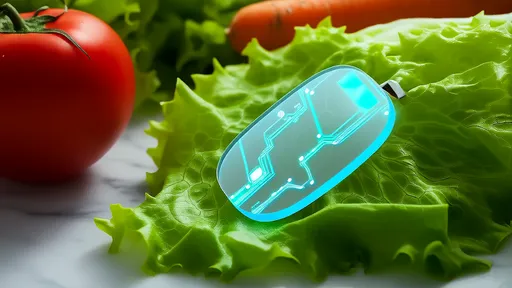
You're about to bite into that fresh salad, but a tiny voice in your head whispers—is this really safe? That uncertainty might soon become a thing of the past, thanks to an innovation that sounds straight out of science fiction: edible electronic sensors. These paper-thin, biocompatible devices can monitor food quality in real-time, detecting everything from bacterial contamination to spoilage indicators before you ever take a bite.
Tech

Acoustic Levitation Technology for Contactless Assembly of Precision Instruments"

By Olivia Reed/Nov 12, 2025

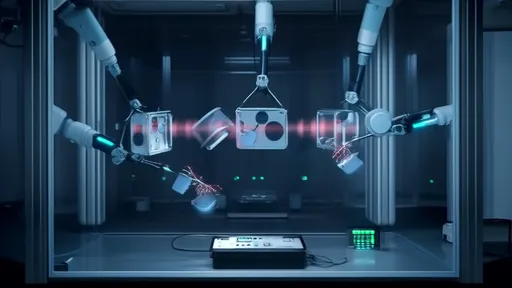
Imagine assembling a delicate microchip or a sensitive medical device without a single physical touch. No risk of contamination, no microscopic scratches from tweezers, no static discharge from human hands. This isn't science fiction; it's the reality being shaped by acoustic levitation technology, a field that's rapidly moving from lab curiosity to industrial application.
Tech

Space Tourism Flights Achieve Weekly Regular Flights

By Amanda Phillips/Nov 12, 2025

It’s official: space tourism is no longer a once-in-a-lifetime spectacle for the ultra-rich. This week, the first weekly commercial spaceflight lifted off, marking a milestone that transforms the cosmos from a distant frontier into a reachable destination. For years, space travel felt like science fiction—something reserved for astronauts and billionaires. But now, with regular departures every seven days, the idea of booking a ticket to the stars is becoming as routine as catching a flight to Paris or Tokyo.
Tech

Microbial Fuel Cells for Wastewater Treatment and Electricity Generation

By George Bailey/Nov 12, 2025

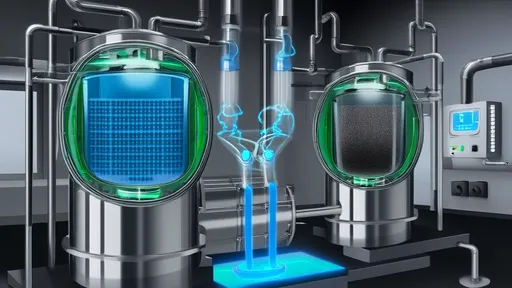
Imagine a wastewater treatment plant that not only cleans water but also generates electricity. It sounds like science fiction, but it's a reality being developed in labs and pilot projects around the world using microbial fuel cells. This isn't just an incremental improvement; it's a fundamental rethinking of wastewater as a resource. For municipalities and industries burdened by high energy costs, this technology represents a potential paradigm shift, turning a costly process into a productive one.
Tech

Intelligent Contraceptive Chip with Remote Control for Activation and Deactivation

By Emma Thompson/Nov 12, 2025

Imagine a world where birth control doesn't involve daily pills, monthly injections, or invasive procedures. A world where you have complete, discreet control over your fertility with a simple tap on your smartphone. This isn't a scene from a sci-fi movie; it's the emerging reality of the smart contraceptive chip. This tiny, implantable device is poised to revolutionize reproductive health by offering unprecedented convenience and, most controversially, the ability to be turned on and off remotely.
Tech

Virtual Power Plant Integrates Solar Energy from Millions of Households

By George Bailey/Nov 12, 2025

Imagine this: millions of households across the country are quietly generating solar power on their rooftops. For years, this energy has largely served individual homes, with any excess often going underutilized. But what if we could pool all that distributed power into a single, coordinated network? That's exactly what virtual power plants are starting to achieve, and the implications are staggering. We're not just talking about individual homes saving on electricity bills anymore—we're looking at a fundamental shift in how entire grids operate. By the end of this piece, you'll understand how this technology works, why it's becoming critical for modern energy systems, and what it means for everyday solar owners. The Rise of Distributed Energy and the Grid's New Challenge As solar panel installations hit record numbers year after year, we're facing a curious problem: too much of a good thing.
Tech

Realizing Dream Visualization through Brainwave Recognition Technology

By John Smith/Nov 12, 2025

Imagine waking up and being able to watch a video of your dreams. It sounds like pure science fiction, but recent advances in brain-computer interfaces and artificial intelligence are bringing us closer than ever to making this a reality. For decades, dreams have been one of the last great frontiers of human consciousness—fleeting, subjective, and notoriously difficult to study or share. Now, researchers are developing systems that can interpret brainwave patterns and translate them into visual representations of what the mind sees during sleep. This isn't just about curiosity; it could revolutionize how we understand mental health, memory, and even creativity.
Tech

Africa's First Lunar Probe Successfully Launched

By Rebecca Stewart/Nov 12, 2025

In a landmark moment for space exploration, the African continent has officially entered the lunar race. The successful launch of the first African-built lunar probe marks a historic leap, not just for the nation behind it, but for the entire global scientific community. For decades, space exploration has been dominated by a handful of nations, but this achievement shatters that paradigm, proving that ambition and scientific prowess are universal.
Tech

Argentina Achieves Blockchain Traceability for the Entire Beef Production Process

By Eric Ward/Nov 12, 2025

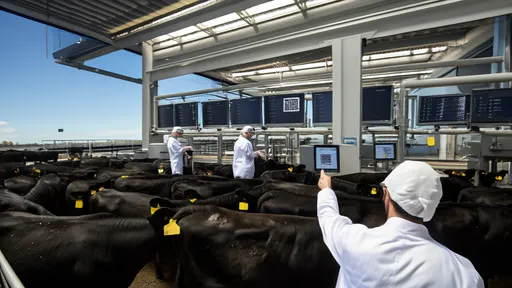
Walking through the sprawling Argentine pampas, the scent of earth and livestock hangs heavy in the air. For generations, the journey of a steak from these pastures to a dinner plate has been a story of trust and assumption. Consumers simply had to believe the labels promising grass-fed, free-range quality. But that narrative is changing dramatically. Argentina, a global beef powerhouse, is now weaving a digital thread of truth through its entire supply chain, leveraging blockchain technology to create an unprecedented level of transparency from ranch to retail.
Tech

Genetically Edited Cotton Yield Increases by 50%"

By Rebecca Stewart/Nov 12, 2025

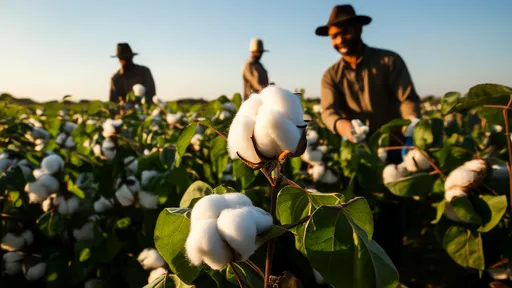
Imagine a cotton field stretching to the horizon, its fluffy white bolls shimmering under the sun. Now picture that same field producing half again as much cotton, using the same resources, on the same land. This isn't a futuristic fantasy; it's the tangible reality being ushered in by breakthroughs in gene editing. For decades, cotton yields have plateaued, with farmers and scientists battling the limits of conventional breeding. The pressure to produce more fiber for a growing global population, while conserving water and arable land, has never been greater. But a quiet revolution is unfolding in laboratories, where tools like CRISPR are being deployed not just to tweak, but to fundamentally redesign cotton's genetic blueprint for unprecedented productivity.
Tech

South Korea Develops Stealth Clothing Material for Military Use

By Daniel Scott/Nov 12, 2025

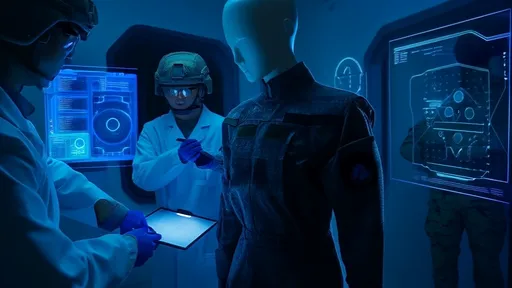
In a quiet laboratory in Daejeon, South Korea, a team of scientists recently made a breakthrough that sounds like it's straight out of a spy thriller. They've developed a new metamaterial that can manipulate light in such a way that it effectively renders objects invisible to certain detection methods. The implications are staggering, and the South Korean government is already funneling significant resources into adapting this technology for military use. This isn't just a lab experiment anymore; it's on a fast track to becoming a real-world asset for soldiers on the ground.
Tech

AI-Composed Symphony Debuts at Vienna's Golden Hall

By Natalie Campbell/Nov 12, 2025

When the first notes of "Neural Rhapsody" echoed through Vienna's golden hall, something unprecedented happened in the centuries-old tradition of classical music. An AI-composed symphony had taken the stage at the Musikverein, one of the world's most prestigious concert halls, and the audience—comprising both skeptical traditionalists and curious innovators—listened with rapt attention. This wasn't just another performance; it was a statement about the evolving relationship between human creativity and machine intelligence.
Tech

Philippines Develops Artificial Intelligence System for Typhoon Early Warning

By Christopher Harris/Nov 12, 2025

The Philippines, an archipelago nation cradled by the Pacific Ocean, knows the fury of typhoons all too well. Every year, these colossal storms carve paths of destruction, displacing communities, crippling infrastructure, and claiming lives. For decades, forecasting has relied on complex atmospheric models, but a new, powerful ally is joining the fight: artificial intelligence. The nation is now pioneering the integration of AI into its early warning systems, a move that could fundamentally change how it prepares for and responds to these natural disasters.
Tech

Saudi Arabia Extracts Drinking Water from Air Using Nanomaterials

By Lily Simpson/Nov 12, 2025

In the heart of the Arabian desert, where water scarcity has long dictated the rhythms of life, a quiet revolution is unfolding. Saudi Arabian researchers have pioneered a method to literally pull drinkable water from thin air using advanced nanomaterials, turning a sci-fi concept into tangible reality. This isn't some distant future tech—it's happening right now in labs where scientists are leveraging the kingdom's arid climate and high humidity to address one of humanity's most pressing challenges.
Tech

Finland Deploys the World's Fastest Undersea Cable

By Laura Wilson/Nov 12, 2025

In a move set to redefine global digital infrastructure, Finland has just activated the world's fastest undersea internet cable. This isn't just another incremental upgrade. It's a monumental leap, promising to reshape how data travels across continents and supercharging connectivity for millions. The new cable, named "Sea Lion," boasts a staggering capacity of 500 terabits per second, effectively future-proofing transatlantic data flow for the next decade.
Tech

U.S. Completes World's Tallest Timber Skyscraper

By Grace Cox/Nov 12, 2025

Construction crews have just fastened the final cross-laminated timber panel to what is now officially the world's tallest mass-timber skyscraper, a stunning 28-story structure piercing the Portland skyline. Dubbed "Aspen Tower," this architectural marvel isn't just breaking height records—it's fundamentally challenging our perception of what building materials can achieve in the 21st century.