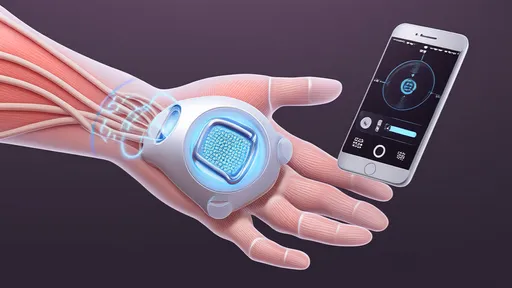
Intelligent Contraceptive Chip with Remote Control for Activation and Deactivation
Imagine a world where birth control doesn't involve daily pills, monthly injections, or invasive procedures. A world where you have complete, discreet control over your fertility with a simple tap on your smartphone. This isn't a scene from a sci-fi movie; it's the emerging reality of the smart contraceptive chip. This tiny, implantable device is poised to revolutionize reproductive health by offering unprecedented convenience and, most controversially, the ability to be turned on and off remotely.
The core technology is a marvel of micro-engineering. The chip itself is about the size of a postage stamp and is typically implanted just under the skin of the buttocks, upper arm, or abdomen in a quick, in-office procedure. It contains a series of micro-reservoirs, each sealed with a thin layer of platinum and titanium. When a woman decides she wants to prevent pregnancy, she sends a secure signal from a dedicated app on her phone. This signal triggers a tiny electrical current that melts the seal on a single reservoir, releasing a precise, daily dose of the hormone levonorgestrel into her body. Each reservoir holds enough for about 16 years of daily use, making it a potential one-time solution for a woman's entire reproductive life.
The leap from a long-term implant to a remotely controlled one is where things get truly futuristic. The mechanism for remote activation and deactivation relies on a miniature, secure receiver within the chip. When you want to "turn off" contraception to try for a baby, you simply use the app to send a stop command. The chip ceases to release the hormone. When you're ready to prevent pregnancy again, you send another command to resume the daily micro-doses. This eliminates the need for a doctor's visit to remove an implant or the stress of restarting a pill regimen, putting the power of timing directly and instantly in the user's hands.
For millions of women, the benefits are profound. It offers a set-and-forget convenience that no other contraceptive method can match. There's no more worrying about forgetting a pill or scheduling a shot. It empowers women with absolute control over their family planning journey, allowing them to align their fertility with life's unpredictable changes—career moves, relationship shifts, or personal readiness—with a level of spontaneity previously impossible. It represents the ultimate in personalized medicine for reproductive health.
However, this incredible power comes with a host of serious ethical and security questions that cannot be ignored. The most glaring concern is the potential for hacking or unauthorized control. What if a malicious actor gained access to the system and could trigger a mass activation or deactivation? The potential for abuse in the context of domestic control or even state-level population policies is a terrifying prospect. Developers are, of course, prioritizing bank-level encryption and multi-factor authentication, but in our interconnected world, no system is ever 100% foolproof.
Beyond external threats, there's the issue of internal pressure. The very feature that provides convenience could, in the wrong hands, become a tool for coercion. A partner could demand the contraceptive be turned off against the woman's will, or parents could seek to control a young adult's fertility. Ensuring that the command to activate or deactivate rests solely with the authenticated user, with potential biometric locks, is a critical hurdle that must be cleared before widespread adoption.
The medical community is watching with a mix of excitement and caution. The promise of a highly effective, user-controlled method is a major advancement. Yet, doctors are keenly aware of the unknowns. How does the body react to the chip's materials over several decades? Are there any long-term side effects from the consistent micro-dosing mechanism? Rigorous, long-term clinical trials are essential to answer these questions and ensure the physical safety of the women who choose this path.
Looking forward, the societal implications are vast. This technology could fundamentally reshape life planning, career trajectories, and relationships. It decouples sexual activity from immediate reproductive consequences more completely than ever before. This freedom is liberating, but it also necessitates a parallel evolution in our social, legal, and ethical frameworks. We need clear laws that define this technology as a protected aspect of personal bodily autonomy and establish severe penalties for any form of tampering or unauthorized access.
The journey of the smart contraceptive chip from lab to mainstream will be a long one, fraught with technical challenges and complex public debate. It forces us to confront difficult questions about privacy, security, and the very nature of control over our own bodies. But one thing is certain: it represents a pivotal moment. It's not just a new product; it's a paradigm shift. By navigating these challenges thoughtfully, we have the opportunity to harness a powerful tool for good, finally giving women the seamless, intelligent, and truly personal control over fertility they deserve.