Edible Electronic Sensors for Food Safety Monitoring
You're about to bite into that fresh salad, but a tiny voice in your head whispers—is this really safe? That uncertainty might soon become a thing of the past, thanks to an innovation that sounds straight out of science fiction: edible electronic sensors. These paper-thin, biocompatible devices can monitor food quality in real-time, detecting everything from bacterial contamination to spoilage indicators before you ever take a bite.
Traditional food safety methods rely heavily on expiration dates, which are often conservative estimates rather than precise indicators. Laboratory testing, while accurate, happens too late to prevent contaminated products from reaching store shelves. This gap in our food monitoring system contributes to approximately 600 million cases of foodborne illnesses globally each year, according to World Health Organization data. The economic impact is equally staggering, with food waste costing the global economy nearly $1 trillion annually—much of it due to premature discarding of perfectly edible food.
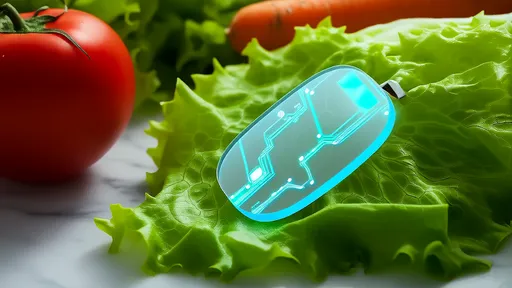
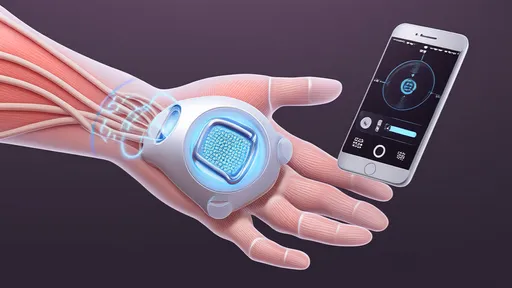
So how do these edible sensors actually work? At their core, they're made from food-grade materials like cellulose, proteins, and conductive edible inks. Researchers at MIT recently developed a sensor using silk-based substrates and magnesium electrodes that safely dissolve in stomach acid. These sensors can detect specific gases produced by spoiling meat or changes in pH levels indicating fruit overripeness. When integrated into food packaging, they provide visible color changes or transmit wireless signals to your smartphone about the product's actual condition.
The manufacturing process involves printing electronic circuits onto edible substrates using food-safe conductive materials. One breakthrough came from Swiss researchers who created sensors using carbon electrodes derived from activated charcoal—a common food additive. These sensors cost mere pennies to produce and can be incorporated directly into food packaging labels or even attached to individual produce items. The beauty of this approach lies in its scalability; existing manufacturing equipment for food packaging can be adapted to include these sensors with minimal retooling.
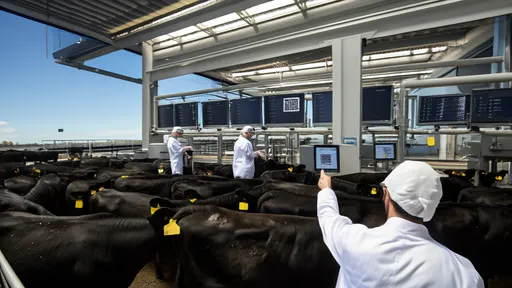
Several companies are already bringing this technology to market. California-based startup Ryp Labs has developed a sticker-like sensor that changes color when produce begins to spoil. Meanwhile, European research consortium FoodSafety has created intelligent packaging that releases natural preservatives when it detects microbial growth. The most advanced implementations involve QR codes that become unreadable as food quality deteriorates—a simple but effective warning system anyone with a smartphone can use.
Beyond simply detecting spoilage, these sensors address deeper issues in our food system. Consider the environmental impact of food waste—rotting food in landfills generates methane, a greenhouse gas 25 times more potent than carbon dioxide. Then there's the economic burden on households, where the average American family throws out nearly $1,500 worth of food annually. Edible sensors could help recalibrate our relationship with food, shifting from arbitrary dates to actual quality metrics.
The technology isn't without its challenges. Regulatory approval remains a significant hurdle, as any material contacting food requires rigorous safety testing. Consumer acceptance represents another barrier—will people trust food that comes with embedded electronics, even if they're edible? And there are technical obstacles too, particularly around creating sensors sensitive enough to detect pathogens at low concentrations but specific enough to avoid false positives from harmless compounds.
Looking ahead, the potential applications extend far beyond your kitchen. Imagine supply chain managers monitoring temperature fluctuations during transport in real-time, or restaurants automatically adjusting menus based on ingredient freshness data. Healthcare facilities could use them to ensure meal safety for immunocompromised patients. The data collected could even help farmers optimize harvest times and reduce pesticide use by providing precise quality metrics.
What makes this technology truly revolutionary isn't just the science—it's the psychological shift it enables. Moving from uncertainty to knowledge, from waste to conservation, from generalized dates to personalized safety information. As these sensors become more sophisticated and affordable, they could fundamentally transform how we interact with the most basic necessity of life: our food.
The next time you stand in your kitchen wondering about that chicken or those berries, remember that help might soon be on the way—in the form of technology you can literally consume. The future of food safety isn't just about better testing—it's about creating an ongoing conversation between our food and ourselves, ensuring every bite is as safe as it is delicious.