Realizing Dream Visualization through Brainwave Recognition Technology
Imagine waking up and being able to watch a video of your dreams. It sounds like pure science fiction, but recent advances in brain-computer interfaces and artificial intelligence are bringing us closer than ever to making this a reality. For decades, dreams have been one of the last great frontiers of human consciousness—fleeting, subjective, and notoriously difficult to study or share. Now, researchers are developing systems that can interpret brainwave patterns and translate them into visual representations of what the mind sees during sleep. This isn't just about curiosity; it could revolutionize how we understand mental health, memory, and even creativity.
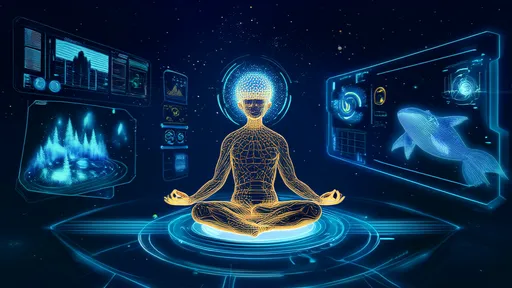
So how does it actually work? At its core, the technology relies on decoding the electrical signals produced by the brain. When you dream, your visual cortex and other regions of the brain activate in patterns similar to when you're awake and seeing real objects. Scientists use non-invasive tools like EEG (electroencephalography) caps, which measure brainwave activity through the scalp. Participants are first shown specific images or videos while awake, and their corresponding brain signals are recorded. Machine learning algorithms are then trained to associate these brainwave patterns with the visual content. Over time, the AI learns to predict—and eventually reconstruct—the imagery a person is experiencing based solely on their neural data.
One of the most compelling breakthroughs came from a team in Japan, where researchers successfully generated basic video clips from dream data. They didn't produce Hollywood-quality films, but the reconstructed images showed recognizable shapes and colors that matched what subjects reported dreaming about. For example, if someone dreamed of a person walking, the system could generate a blurry but discernible figure in motion. This process involves layering data from different brainwave frequencies—alpha, beta, theta—each associated with various states of alertness and visual processing.
But it's not just about replaying dreams like a movie. The real challenge lies in the subjective and abstract nature of dreaming. How do you capture the feeling of flying or the nonsensical logic of a dream narrative? Current models are better at identifying static objects—like an apple or a chair—than dynamic scenes or emotions. Researchers are now integrating fMRI data, which tracks blood flow in the brain, to add more detail and dimensionality. Combining EEG with fMRI allows for a richer dataset, improving the accuracy of visualizations.
What does this mean for everyday people? Beyond the "wow" factor, dream visualization has profound implications. For individuals with PTSD, recurring nightmares can be debilitating. If therapists could "see" these nightmares, they might develop more targeted interventions. In the creative industries, artists and writers could tap into their subconscious imagery for inspiration. Some companies are even exploring consumer applications, like personalized dream journals that generate sketches of your nightly adventures.
Of course, the technology raises important ethical questions. Who owns your dream data? Could it be used against you in legal or employment contexts? Privacy concerns are significant, as brain data is arguably the most personal information we have. Researchers emphasize the need for robust consent protocols and data anonymization. It's a classic case of innovation outpacing regulation, and society will need to grapple with these issues sooner rather than later.
Looking ahead, the potential is staggering. Some experts believe we'll eventually have devices that allow real-time dream sharing or even collaborative dreaming. While that remains in the realm of speculation, the progress so far is undeniable. We're moving from an era where dreams were locked inside our heads to one where they can be recorded, analyzed, and shared. It's a thrilling—and slightly unnerving—frontier.
If you're intrigued by the possibilities, follow labs and companies working in neurotechnology. Many publish their findings openly, and some even recruit volunteers for studies. Who knows? The next dream they visualize could be yours.