Saudi Arabia Extracts Drinking Water from Air Using Nanomaterials
In the heart of the Arabian desert, where water scarcity has long dictated the rhythms of life, a quiet revolution is unfolding. Saudi Arabian researchers have pioneered a method to literally pull drinkable water from thin air using advanced nanomaterials, turning a sci-fi concept into tangible reality. This isn't some distant future tech—it's happening right now in labs where scientists are leveraging the kingdom's arid climate and high humidity to address one of humanity's most pressing challenges.
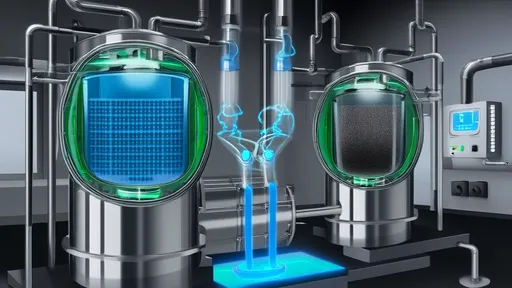
The science behind this breakthrough centers on metal-organic frameworks (MOFs), crystalline materials with incredible surface areas that act like molecular sponges. These nanostructures contain pores specifically engineered to capture water vapor from the atmosphere during cooler night hours, then release it as liquid water when temperatures rise. What makes this technology particularly suited for Saudi Arabia is that it works efficiently even in low-humidity environments—perfect for desert regions where traditional atmospheric water generators struggle.
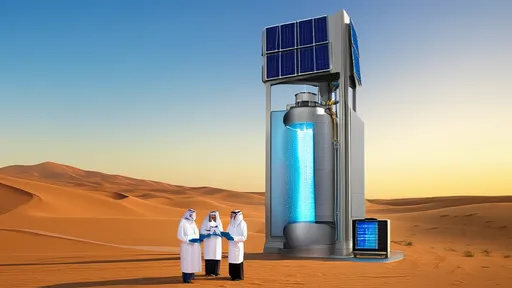
Unlike conventional water sources that require extensive infrastructure, these MOF-based harvesters operate completely off-grid using minimal energy. The latest prototypes can produce several liters of clean water daily per kilogram of material, with researchers continuously optimizing the absorption capacity. The water produced exceeds World Health Organization standards for drinking water, requiring no additional filtration or treatment despite being extracted from potentially polluted urban air—the MOFs naturally filter out contaminants during the absorption process.
What's particularly brilliant about this approach is how it turns environmental challenges into advantages. Saudi Arabia's significant temperature differential between day and night actually enhances the harvesting efficiency, while the abundant sunlight provides perfect solar power for the minimal energy required. Researchers have developed specialized MOF composites that maintain stability through thousands of cycling operations, addressing earlier concerns about material degradation in harsh desert conditions.
The implications extend far beyond household drinking water. Agriculture consumes approximately 80% of Saudi Arabia's water resources, mostly from non-renewable aquifers. Pilot projects are already testing scaled-up versions for greenhouse irrigation, where the consistent water production could revolutionize desert farming. The technology also offers promising applications for emergency response during natural disasters and military operations where water logistics present major challenges.
While the science is impressive, the human impact story is what truly captivates. Remote communities that previously relied on expensive trucked-in water now have access to continuous local production. The systems require minimal maintenance—no complex machinery or specialized operators needed. This accessibility factor makes the technology particularly valuable for developing regions where traditional water infrastructure remains impractical or unaffordable.
Looking ahead, researchers are working on next-generation MOFs that can capture water at even lower humidity levels while increasing daily output. The integration with solar panels creates completely self-sustaining units that could eventually become as commonplace as solar water heaters in suitable climates. As production scales up and costs decrease, what began as laboratory research might soon become a standard feature of sustainable building design worldwide.
The success of this technology in Saudi Arabia's challenging environment demonstrates its potential global applicability. From drought-stricken California to water-stressed communities across Africa and Asia, the ability to harvest atmospheric water efficiently could redefine our relationship with this precious resource. The kingdom's investment in such innovation reflects a broader shift toward technological solutions for environmental challenges—proving that sometimes, the answers to our biggest problems are already floating in the air around us.