Mind-Controlled Drone Racing Tournament Held
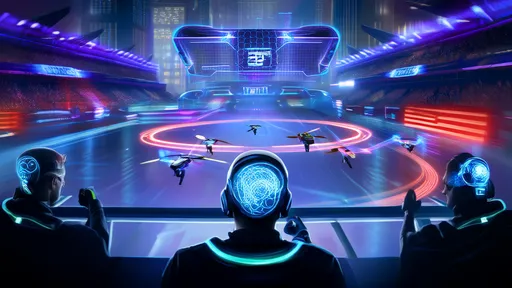
Imagine piloting a drone at 60 miles per hour through a twisting, obstacle-filled course using nothing but your brainwaves. That’s not science fiction anymore—it’s the reality that unfolded at the world’s first Brain-Controlled Drone Racing Championship, where pilots replaced joysticks with neural interfaces, turning mental focus into high-speed aerial maneuvers.
The competition, held at a state-of-the-art indoor arena, featured pilots wearing lightweight electroencephalogram (EEG) headsets. These devices detect electrical activity from the brain, translating specific thought patterns—like concentration or relaxation—into flight commands. To steer left, a racer might visualize a left turn intensely; to gain altitude, they’d focus on a calming image. It sounds almost magical, but the underlying tech relies on machine learning algorithms that adapt to each user’s unique neural signatures over training sessions.
One of the biggest hurdles for participants was maintaining intense mental clarity amid the pressure of a race. "At first, my drone kept wobbling because my thoughts were all over the place," shared Liam Chen, a finalist. "You can’t just ‘think’ hard—you have to find a specific mental state, almost like meditation in motion." Organizers noted that racers spent weeks in neurofeedback training, learning to control their brainwave patterns before even attempting a lap. The learning curve is steep; a single lapse in focus could send a drone veering off-course.
Beyond the spectacle, the event highlighted practical applications for brain-computer interface (BCI) technology. Researchers from partnering universities collected vast datasets on neural plasticity and real-time cognitive load. "This isn’t just about racing," explained Dr. Alina Rossi, a neuroscientist involved in the project. "We’re studying how the brain adapts to controlling external devices, which could revolutionize assistive tech for people with mobility impairments."
Critics initially questioned the fairness of the races, given that EEG accuracy can vary with individual physiology. To address this, each headset was calibrated individually, and pilots underwent baseline tests to ensure a level playing field. Still, some competitors found that factors like fatigue or stress significantly impacted their performance—a reminder that mental fitness is as crucial as technical skill in this emerging sport.
The championship’s success has already sparked interest from tech investors and gaming companies. "We’re seeing a new genre of entertainment emerge," said a representative from a virtual reality firm. "Combining BCI with immersive environments could lead to experiences where you control entire worlds with your mind." Several startups are now developing consumer-friendly neural headsets, aiming to make brain-controlled tech accessible within the next few years.
For spectators, the races were both bewildering and mesmerizing. Without the roar of engines or visible controllers, the silence in the arena was punctuated only by the buzz of drones and the concentrated breaths of pilots. It felt less like a traditional sport and more like a glimpse into a future where the boundaries between mind and machine continue to blur.
Looking ahead, organizers plan to expand the league with regional qualifiers and junior divisions. They’re also experimenting with multi-player races, where teams collaborate using shared neural inputs. If this inaugural event is any indication, brain-controlled sports might soon transition from niche curiosity to mainstream phenomenon, reshaping how we interact with technology—and each other.
Ready to train your brain for the next race? Follow updates on official channels or try a beginner-friendly EEG headset to start your own mental flight training. The sky is no longer the limit—it’s just the beginning.