Philippines Develops Artificial Intelligence System for Typhoon Early Warning

Nov 12, 2025 By Christopher Harris

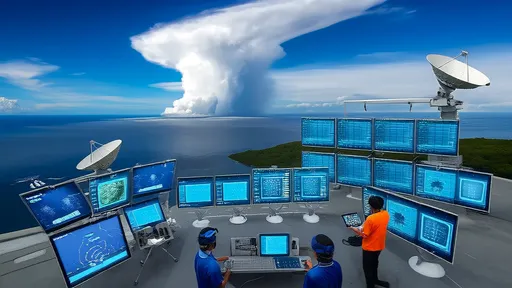
The Philippines, an archipelago nation cradled by the Pacific Ocean, knows the fury of typhoons all too well. Every year, these colossal storms carve paths of destruction, displacing communities, crippling infrastructure, and claiming lives. For decades, forecasting has relied on complex atmospheric models, but a new, powerful ally is joining the fight: artificial intelligence. The nation is now pioneering the integration of AI into its early warning systems, a move that could fundamentally change how it prepares for and responds to these natural disasters.


This isn't about replacing the skilled meteorologists at the state weather bureau, PAGASA. It's about giving them a sharper, faster tool. The core of this initiative involves feeding AI algorithms a staggering diet of data—decades of historical typhoon tracks, real-time satellite imagery, ocean temperature readings, and atmospheric pressure data. The machine learning models then chew through this information, identifying patterns and correlations far too subtle or complex for the human eye to detect in a time-critical situation. The goal is to predict a typhoon's path and intensity with greater accuracy and, crucially, with more lead time.


One of the most promising applications lies in forecasting rapid intensification, a phenomenon where a storm's winds explosively strengthen in a short period. This has historically been a nightmare for forecasters and a primary reason for last-minute, chaotic evacuations. The AI system is being trained to spot the early atmospheric signatures of this process. By analyzing subtle shifts in a storm's structure and its interaction with warm ocean waters, the model can provide a probabilistic forecast that a storm is about to become significantly more dangerous, giving communities those precious extra hours to move to safety.


Beyond the storm's behavior itself, the AI's capabilities extend to impact forecasting. It's one thing to know a typhoon is coming; it's another to know exactly which barangays will be submerged or which roads will be impassable. By integrating topographical data, land elevation maps, and infrastructure details, the system can generate hyper-localized flood and landslide risk maps. This allows local government units to move from a broad, regional alert to a precise, street-level understanding of the threat, enabling more efficient and targeted pre-emptive evacuations and resource allocation.


The path to implementation, however, is not without its challenges. The effectiveness of any AI system is wholly dependent on the quality and quantity of data it receives. Maintaining a robust network of weather stations, radar, and data streams is a constant logistical and financial effort. Furthermore, the "black box" nature of some complex AI models can be a hurdle; forecasters need to trust the system's predictions. This is being addressed by focusing on explainable AI, where the system doesn't just give an answer but also provides the key data points and reasoning behind its forecast, building confidence among the human experts who hold the final responsibility for public warnings.


For the average Filipino family, the success of this technology translates into something simple yet profound: time. Time to secure their homes, time to gather important documents, and time to make the critical decision to evacuate. It represents a shift from reactive panic to proactive preparation. Community drills can be activated with more certainty, and relief supplies can be pre-positioned in the areas most likely to be isolated. This technological leap is not just about saving property; it's about building a more resilient society, one where the memory of past typhoons informs a safer future.


The integration of AI into the Philippines' disaster preparedness framework is a testament to the nation's resilience and innovation in the face of a recurring threat. While the system continues to be refined and validated, its potential is undeniable. It stands as a powerful example of how cutting-edge technology can be harnessed for the most human of imperatives—protecting lives and communities from the raw power of nature.


Recommend Posts
Tech

Mind-Controlled Drone Racing Tournament Held

By Emily Johnson/Nov 12, 2025

Imagine piloting a drone at 60 miles per hour through a twisting, obstacle-filled course using nothing but your brainwaves. That’s not science fiction anymore—it’s the reality that unfolded at the world’s first Brain-Controlled Drone Racing Championship, where pilots replaced joysticks with neural interfaces, turning mental focus into high-speed aerial maneuvers.
Tech

Tired of Missing Family Events? A Smarter Way to Share Your Schedule

By Christopher Harris/Dec 31, 2025

Discover how a shared digital calendar transformed one family's chaotic routine into harmonious coordination, reducing stress and missed moments while fostering deeper connections through intentional tech use.
Tech

Graphene Batteries Charge 10 Times Faster

By Natalie Campbell/Nov 12, 2025

Imagine charging your phone from zero to full in under five minutes. Or an electric vehicle that powers up faster than you can grab a coffee. This isn't a distant sci-fi dream—it's the tangible reality that graphene-enhanced batteries are bringing to our doorstep. Researchers have consistently reported charging speeds up to ten times faster than conventional lithium-ion batteries, a breakthrough that could fundamentally reshape our relationship with technology and energy.
Tech

Portugal Harnesses Wave Energy to Power the Grid

By Jessica Lee/Nov 12, 2025

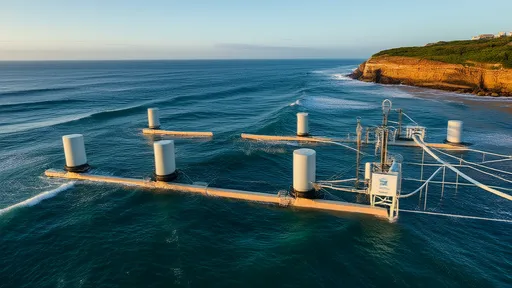
In a world increasingly focused on renewable energy, a quiet revolution is happening along the coast of Portugal. The country is now successfully harnessing the relentless power of the Atlantic Ocean, converting the kinetic energy of its waves into electricity that is feeding directly into the national grid. This isn't a small-scale pilot project anymore; it's a fully operational, grid-connected reality, marking a significant milestone for marine energy in Europe and beyond.
Tech

Canada Invents Wood Nanofibers as an Alternative to Plastics

By Rebecca Stewart/Nov 12, 2025

It's a problem we've all encountered: you buy a single-use plastic container, use it for maybe an hour, and then it sits in a landfill for the next five centuries. The sheer permanence of our disposable culture is staggering. But what if the solution to our plastic crisis has been quietly growing in our forests all along? A groundbreaking innovation from Canadian researchers is turning the very fibers of wood into a material that could realistically replace a significant portion of the plastics choking our planet.
Tech

Beyond the Dashboard: How Tracking My Learning Changed How I Live

By Noah Bell/Dec 30, 2025

This personal essay explores how tracking learning habits transformed the author's daily life, from morning routines to parenting and coping with crisis. By observing patterns in focus, energy, and emotion, the author gained self-awareness that led to lasting changes in confidence, relationships, and resilience. It's a reflection on using simple tools not for productivity, but for deeper self-understanding and intentional living.
Tech

Edible Electronic Sensors for Food Safety Monitoring

By Amanda Phillips/Nov 12, 2025

You're about to bite into that fresh salad, but a tiny voice in your head whispers—is this really safe? That uncertainty might soon become a thing of the past, thanks to an innovation that sounds straight out of science fiction: edible electronic sensors. These paper-thin, biocompatible devices can monitor food quality in real-time, detecting everything from bacterial contamination to spoilage indicators before you ever take a bite.
Tech

Acoustic Levitation Technology for Contactless Assembly of Precision Instruments"

By Olivia Reed/Nov 12, 2025

Imagine assembling a delicate microchip or a sensitive medical device without a single physical touch. No risk of contamination, no microscopic scratches from tweezers, no static discharge from human hands. This isn't science fiction; it's the reality being shaped by acoustic levitation technology, a field that's rapidly moving from lab curiosity to industrial application.
Tech

Space Tourism Flights Achieve Weekly Regular Flights

By Amanda Phillips/Nov 12, 2025

It’s official: space tourism is no longer a once-in-a-lifetime spectacle for the ultra-rich. This week, the first weekly commercial spaceflight lifted off, marking a milestone that transforms the cosmos from a distant frontier into a reachable destination. For years, space travel felt like science fiction—something reserved for astronauts and billionaires. But now, with regular departures every seven days, the idea of booking a ticket to the stars is becoming as routine as catching a flight to Paris or Tokyo.
Tech

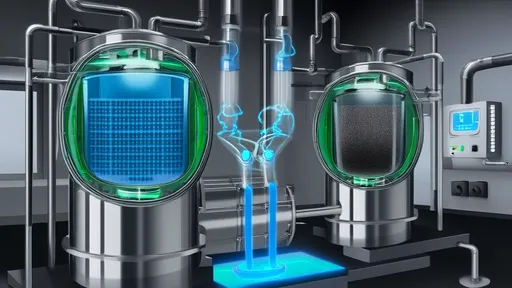
Microbial Fuel Cells for Wastewater Treatment and Electricity Generation

By George Bailey/Nov 12, 2025

Imagine a wastewater treatment plant that not only cleans water but also generates electricity. It sounds like science fiction, but it's a reality being developed in labs and pilot projects around the world using microbial fuel cells. This isn't just an incremental improvement; it's a fundamental rethinking of wastewater as a resource. For municipalities and industries burdened by high energy costs, this technology represents a potential paradigm shift, turning a costly process into a productive one.
Tech

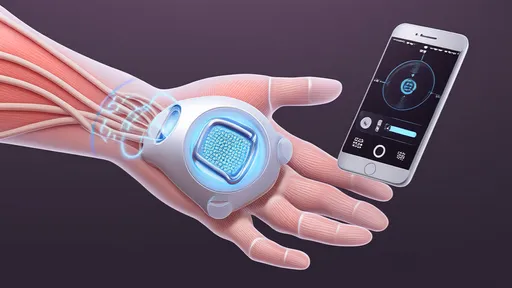
Intelligent Contraceptive Chip with Remote Control for Activation and Deactivation

By Emma Thompson/Nov 12, 2025

Imagine a world where birth control doesn't involve daily pills, monthly injections, or invasive procedures. A world where you have complete, discreet control over your fertility with a simple tap on your smartphone. This isn't a scene from a sci-fi movie; it's the emerging reality of the smart contraceptive chip. This tiny, implantable device is poised to revolutionize reproductive health by offering unprecedented convenience and, most controversially, the ability to be turned on and off remotely.
Tech

Virtual Power Plant Integrates Solar Energy from Millions of Households

By George Bailey/Nov 12, 2025

Imagine this: millions of households across the country are quietly generating solar power on their rooftops. For years, this energy has largely served individual homes, with any excess often going underutilized. But what if we could pool all that distributed power into a single, coordinated network? That's exactly what virtual power plants are starting to achieve, and the implications are staggering. We're not just talking about individual homes saving on electricity bills anymore—we're looking at a fundamental shift in how entire grids operate. By the end of this piece, you'll understand how this technology works, why it's becoming critical for modern energy systems, and what it means for everyday solar owners. The Rise of Distributed Energy and the Grid's New Challenge As solar panel installations hit record numbers year after year, we're facing a curious problem: too much of a good thing.
Tech

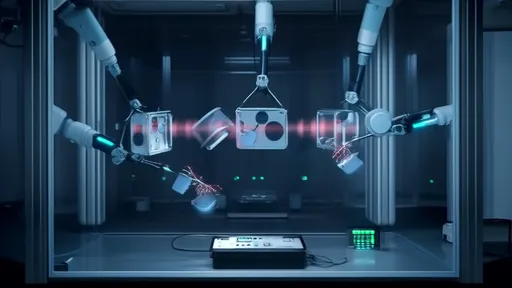
Realizing Dream Visualization through Brainwave Recognition Technology

By John Smith/Nov 12, 2025

Imagine waking up and being able to watch a video of your dreams. It sounds like pure science fiction, but recent advances in brain-computer interfaces and artificial intelligence are bringing us closer than ever to making this a reality. For decades, dreams have been one of the last great frontiers of human consciousness—fleeting, subjective, and notoriously difficult to study or share. Now, researchers are developing systems that can interpret brainwave patterns and translate them into visual representations of what the mind sees during sleep. This isn't just about curiosity; it could revolutionize how we understand mental health, memory, and even creativity.
Tech

Africa's First Lunar Probe Successfully Launched

By Rebecca Stewart/Nov 12, 2025

In a landmark moment for space exploration, the African continent has officially entered the lunar race. The successful launch of the first African-built lunar probe marks a historic leap, not just for the nation behind it, but for the entire global scientific community. For decades, space exploration has been dominated by a handful of nations, but this achievement shatters that paradigm, proving that ambition and scientific prowess are universal.
Tech

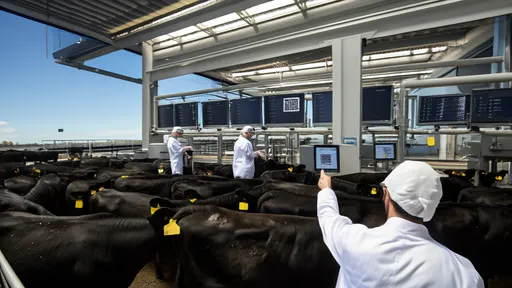
Argentina Achieves Blockchain Traceability for the Entire Beef Production Process

By Eric Ward/Nov 12, 2025

Walking through the sprawling Argentine pampas, the scent of earth and livestock hangs heavy in the air. For generations, the journey of a steak from these pastures to a dinner plate has been a story of trust and assumption. Consumers simply had to believe the labels promising grass-fed, free-range quality. But that narrative is changing dramatically. Argentina, a global beef powerhouse, is now weaving a digital thread of truth through its entire supply chain, leveraging blockchain technology to create an unprecedented level of transparency from ranch to retail.
Tech

Genetically Edited Cotton Yield Increases by 50%"

By Rebecca Stewart/Nov 12, 2025

Imagine a cotton field stretching to the horizon, its fluffy white bolls shimmering under the sun. Now picture that same field producing half again as much cotton, using the same resources, on the same land. This isn't a futuristic fantasy; it's the tangible reality being ushered in by breakthroughs in gene editing. For decades, cotton yields have plateaued, with farmers and scientists battling the limits of conventional breeding. The pressure to produce more fiber for a growing global population, while conserving water and arable land, has never been greater. But a quiet revolution is unfolding in laboratories, where tools like CRISPR are being deployed not just to tweak, but to fundamentally redesign cotton's genetic blueprint for unprecedented productivity.
Tech

South Korea Develops Stealth Clothing Material for Military Use

By Daniel Scott/Nov 12, 2025

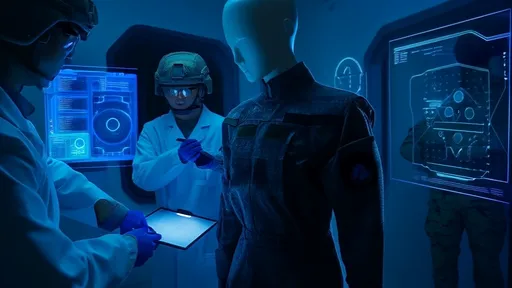
In a quiet laboratory in Daejeon, South Korea, a team of scientists recently made a breakthrough that sounds like it's straight out of a spy thriller. They've developed a new metamaterial that can manipulate light in such a way that it effectively renders objects invisible to certain detection methods. The implications are staggering, and the South Korean government is already funneling significant resources into adapting this technology for military use. This isn't just a lab experiment anymore; it's on a fast track to becoming a real-world asset for soldiers on the ground.
Tech

AI-Composed Symphony Debuts at Vienna's Golden Hall

By Natalie Campbell/Nov 12, 2025

When the first notes of "Neural Rhapsody" echoed through Vienna's golden hall, something unprecedented happened in the centuries-old tradition of classical music. An AI-composed symphony had taken the stage at the Musikverein, one of the world's most prestigious concert halls, and the audience—comprising both skeptical traditionalists and curious innovators—listened with rapt attention. This wasn't just another performance; it was a statement about the evolving relationship between human creativity and machine intelligence.
Tech

Philippines Develops Artificial Intelligence System for Typhoon Early Warning

By Christopher Harris/Nov 12, 2025

The Philippines, an archipelago nation cradled by the Pacific Ocean, knows the fury of typhoons all too well. Every year, these colossal storms carve paths of destruction, displacing communities, crippling infrastructure, and claiming lives. For decades, forecasting has relied on complex atmospheric models, but a new, powerful ally is joining the fight: artificial intelligence. The nation is now pioneering the integration of AI into its early warning systems, a move that could fundamentally change how it prepares for and responds to these natural disasters.
Tech

Saudi Arabia Extracts Drinking Water from Air Using Nanomaterials

By Lily Simpson/Nov 12, 2025

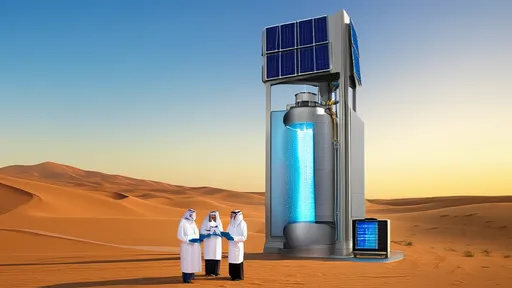
In the heart of the Arabian desert, where water scarcity has long dictated the rhythms of life, a quiet revolution is unfolding. Saudi Arabian researchers have pioneered a method to literally pull drinkable water from thin air using advanced nanomaterials, turning a sci-fi concept into tangible reality. This isn't some distant future tech—it's happening right now in labs where scientists are leveraging the kingdom's arid climate and high humidity to address one of humanity's most pressing challenges.
Tech

Finland Deploys the World's Fastest Undersea Cable

By Laura Wilson/Nov 12, 2025

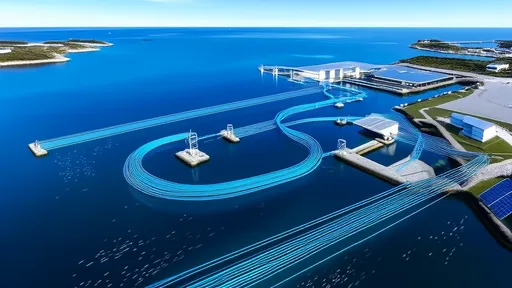
In a move set to redefine global digital infrastructure, Finland has just activated the world's fastest undersea internet cable. This isn't just another incremental upgrade. It's a monumental leap, promising to reshape how data travels across continents and supercharging connectivity for millions. The new cable, named "Sea Lion," boasts a staggering capacity of 500 terabits per second, effectively future-proofing transatlantic data flow for the next decade.
Tech

U.S. Completes World's Tallest Timber Skyscraper

By Grace Cox/Nov 12, 2025

Construction crews have just fastened the final cross-laminated timber panel to what is now officially the world's tallest mass-timber skyscraper, a stunning 28-story structure piercing the Portland skyline. Dubbed "Aspen Tower," this architectural marvel isn't just breaking height records—it's fundamentally challenging our perception of what building materials can achieve in the 21st century.