Abandoned Railway Turned into a Walking Path: A Wildflower Corridor on Sleepers
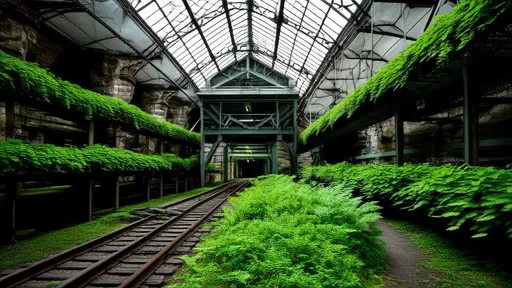
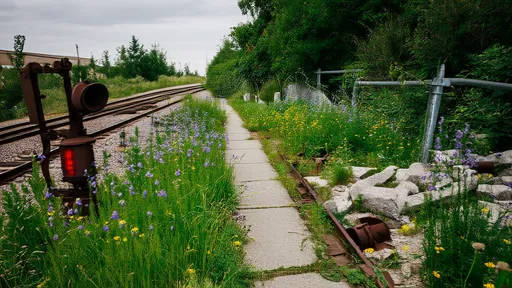
The old railway tracks had been silent for decades, their iron bones rusting under the weight of time. Where steam engines once roared, only whispers of the past remained—until the community decided to breathe new life into this forgotten corridor. What emerged was not just a walking path, but a living tapestry of wildflowers and reclaimed timber, a testament to nature’s resilience and human ingenuity.
Stretching nearly three miles through the heart of the valley, the abandoned rail line had long been a scar on the landscape—a reminder of industries that had vanished and towns that had shrunk. But where others saw decay, a group of local botanists and urban planners saw potential. They envisioned a space where history and ecology could intertwine, where each rotting railroad tie could become a planter for native blooms. The result? A meandering wildflower corridor that changes with the seasons, its scent carried by the same winds that once whistled through passing train cars.
The transformation wasn’t instantaneous. Volunteers spent months extracting nails from weathered oak ties, treating the wood to prevent rot, and carefully spacing them to create natural planting beds. The original gravel ballast was sifted and reused as drainage material, while the railbed’s gentle slope—engineered for 19th-century locomotives—proved perfect for wheelchair accessibility. What makes this path extraordinary isn’t just its sustainability, but how it honors the railway’s legacy. Interpretive signs mounted on salvaged signal posts tell stories of the line’s heyday, when it carried coal from the mines and families to seaside resorts.
Spring transforms the corridor into a pastel dreamscape. Lupines and columbines push through the gaps between ties, their stems weaving through the iron spikes that once held rails. By midsummer, the air hums with pollinators drawn to purple coneflowers and black-eyed Susans that now grow where railroad workers once packed snow around switches. The autumn brings goldenrod and asters, their vivid yellows and purples contrasting against the silver-gray wood. Even in winter, the path remains magical—frost etching delicate patterns on the dormant seed heads, the occasional hardy hellebore blooming defiantly beside snow-dusted timbers.
This isn’t just a prettier version of a hiking trail. The project’s designers deliberately selected plant species that existed along the original rail route before industrialization. Archival photographs and herbarium records guided their choices, making the wildflower corridor a kind of botanical time machine. Walking its length today is to experience the landscape as a Victorian naturalist might have seen it—minus the coal smoke. The effect is particularly poignant where the path skirts the old stationmaster’s house, now a visitor center, its platform overrun with fragrant sweet woodruff and violets.
Unexpected benefits have emerged. The corridor acts as a wildlife highway, allowing foxes and hedgehogs to traverse urban areas safely beneath bridges that once shook with freight trains. School groups come to sketch the flowers while historians lead tours pointing out where the 1913 derailment occurred. Local breweries have even started producing a "Rail Trail Ale" with elderflowers foraged from the path. Most remarkably, the project has sparked similar initiatives across the region, with three other abandoned lines being converted to "linear gardens" that preserve industrial heritage while combating habitat fragmentation.
The magic lies in the details—how morning dew collects in the hollows of repurposed rail spikes now serving as sculpture elements, how evening light filters through seed heads where telegraph wires once hung. This is more than adaptive reuse; it’s alchemy. The path doesn’t erase the railway’s history—it layers new meaning onto its skeleton, creating a space where every footfall connects walkers to multiple timelines. As one volunteer aptly put it while planting oxeye daisies, "We’re not covering up the past. We’re letting it bloom."
On weekends, you’ll find couples pushing strollers between the flower banks, their children captivated by butterflies sipping from bergamot blossoms. Retired rail workers sometimes sit on benches crafted from signal box timber, smiling as they watch hikers pass where boxcars once rumbled. The corridor has become what all great public spaces should be—a living palimpsest that honors its origins while serving new purposes. And when the evening express roars past on the adjacent active line, its passengers glimpse this parallel universe where speed has given way to stillness, and steel has surrendered to petals.