Children's Planner: Playground Design Workshop
In a world where urban spaces are rapidly shrinking and children’s playtime is increasingly dominated by screens, the role of thoughtful playground design has never been more critical. The Child-Centric Playground Design Workshop, led by seasoned child planners and landscape architects, seeks to bridge the gap between urban development and the developmental needs of children. This immersive workshop isn’t just about slides and swings—it’s a deep dive into how play spaces can foster creativity, physical health, and social skills while adapting to diverse communities and environments.
The workshop begins with a fundamental question: What makes a playground truly engaging for children? Traditional designs often prioritize safety and durability over imagination, resulting in sterile, cookie-cutter structures. However, research shows that children thrive in environments that challenge them physically and intellectually. The workshop emphasizes dynamic elements like sensory gardens, interactive water features, and modular structures that can be rearranged by children themselves. These components don’t just entertain—they teach problem-solving, risk assessment, and cooperation.
One of the most compelling sessions explores the cultural and geographical adaptability of playgrounds. A design that works in a bustling city like Tokyo might fall flat in a rural village in Norway. Facilitators share case studies of successful projects, such as a bamboo maze in Bali that incorporates local craftsmanship or a reclaimed industrial site in Berlin transformed into an adventure playground. Participants learn to balance universal principles of child development with hyper-local materials, traditions, and even climate conditions. The goal is to create spaces that feel both familiar and exciting to the children who use them.
Another focal point is inclusivity. Too often, playgrounds exclude children with disabilities due to narrow design parameters. The workshop introduces innovative approaches like wheelchair-accessible sandpits with adjustable heights, tactile pathways for visually impaired children, and quiet zones for those with sensory sensitivities. These features aren’t add-ons—they’re integral to the design process from day one. Experts stress that an inclusive playground benefits all children by normalizing diversity and encouraging empathy during formative years.
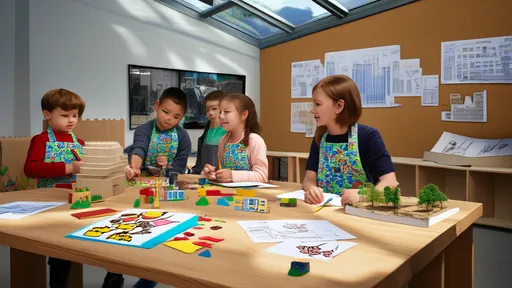
Perhaps the most transformative aspect of the workshop is its hands-on component. Participants don’t just theorize—they collaborate on prototyping small-scale models using recycled materials, 3D-printing tools, and even augmented reality simulations. This trial-and-error process mirrors how children interact with play spaces, revealing unexpected opportunities for innovation. For instance, a group might discover that a simple ramp becomes a pirate ship when paired with a fabric sail, demonstrating how flexible design sparks imaginative play.
As cities grow denser and childhood becomes increasingly digitized, the workshop’s message resonates beyond architects and planners. Parents, educators, and policymakers leave with a renewed understanding of play as a right, not a privilege. The final presentations often reveal startlingly simple yet profound ideas: a cluster of tree stumps becomes an impromptu storytelling circle, or a wall of movable panels turns into a constantly evolving art project. These concepts prove that exceptional playgrounds require not massive budgets, but rather a willingness to see the world through a child’s eyes.
The Child-Centric Playground Design Workshop doesn’t just teach skills—it cultivates a mindset. Graduates often describe it as “unlearning adulthood” to rediscover the raw curiosity that fuels lifelong learning. In an era where play is undervalued, this workshop stands as a testament to the idea that the best cities aren’t just smart or sustainable; they’re playful at heart, designed for the smallest citizens to dream big.