Expedition to the Ross Ice Shelf
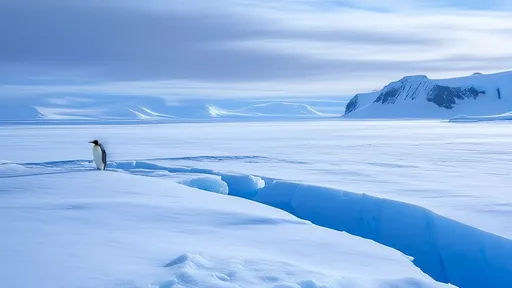
British explorer Sir James Clark Ross first laid eyes on the colossal ice structure in 1841, his ships Erebus and Terror halted by what he described in his logs as "a mighty barrier of ice." The Ross Ice Shelf, as it would later be named, stretches over an area roughly the size of France, its sheer vertical face rising like a frozen cliff from the Southern Ocean. This monumental slab of floating ice represents one of Antarctica's most significant geographical features and continues to captivate scientists and adventurers alike with its secrets locked deep within its frozen layers.
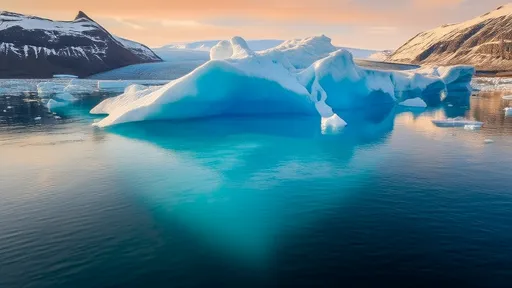
The shelf's formation is a continuous process that spans millennia. Snow accumulates on the Antarctic continent, compressing under its own weight into dense ice that gradually flows toward the coast through immense glaciers. When these glacial flows reach the Ross Sea, they merge into a single floating platform that remains attached to the bedrock while extending hundreds of miles over the ocean. What makes the Ross Ice Shelf particularly remarkable is its dynamic nature—it constantly calves icebergs from its northern edge while being replenished by new ice from the southern glaciers, maintaining a delicate equilibrium that scientists carefully monitor.
Modern expeditions to the shelf face challenges that would have been unimaginable to early explorers. The United States Antarctic Program maintains McMurdo Station on Ross Island, serving as the primary hub for scientific operations in the region. From this remote outpost, researchers deploy sophisticated equipment including ice-penetrating radar, seismic sensors, and hot-water drilling systems capable of melting through hundreds of meters of ice to access the hidden ocean beneath. These technological advances have transformed our understanding of the shelf's structure and behavior, revealing complex systems operating beneath its seemingly static surface.
Recent scientific investigations have uncovered startling discoveries about the shelf's vulnerability to climate change. In 2017, researchers from New Zealand's Victoria University documented evidence of surface melting occurring at unprecedented rates during Antarctic summer months. The phenomenon, previously thought to be rare in this region, appears to be accelerating as warmer air temperatures create meltwater ponds that can fracture the ice when they refreeze. These fractures potentially weaken the shelf's structural integrity, raising concerns among glaciologists about its long-term stability in a warming world.
Beneath the shelf's massive frozen expanse lies an ecosystem that exists in near-total darkness, where organisms have adapted to extreme conditions. Through boreholes drilled through the ice, scientists have discovered diverse communities of phytoplankton and krill thriving in the cold waters, supported by nutrients carried by ocean currents. These discoveries have prompted new questions about how climate-induced changes to the shelf might impact this unique marine environment, particularly as warming waters potentially alter the delicate balance of this sub-ice world.
The shelf's significance extends beyond its immediate environment, playing a crucial role in global climate systems. Acting as a natural buffer, it slows the flow of continental ice into the ocean, effectively regulating sea level rise. Scientists estimate that if the entire Ross Ice Shelf were to disintegrate, the accelerated flow of land ice behind it could raise global sea levels by several meters over subsequent centuries. This sobering reality has placed the shelf at the center of international climate research efforts, with multiple nations collaborating to monitor its behavior through satellite observations and ground-based measurements.
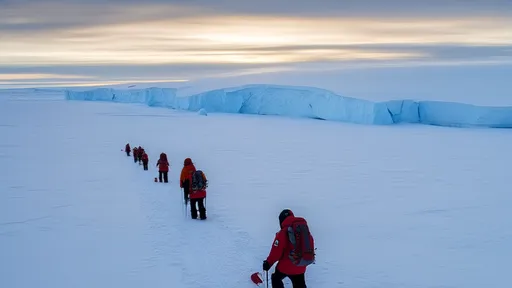
Exploration of the shelf continues to push the boundaries of human endurance and technological innovation. The most ambitious modern expedition occurred between 2015 and 2017, when an international team spent multiple field seasons drilling through the ice to retrieve sediment samples from the ocean floor below. Their findings revealed that the shelf has collapsed and reformed multiple times throughout Earth's history, providing crucial context for understanding its current behavior. These historical cycles offer both warnings and reassurance—evidence that the shelf can recover from disintegration, but also that current warming trends could trigger changes not seen in human civilization.
Looking toward the future, researchers are developing increasingly sophisticated methods to study the shelf's complex systems. Autonomous underwater vehicles now map the hidden ocean cavity beneath the ice, measuring water temperature and circulation patterns that influence melting rates from below. Meanwhile, satellite-based radar systems track the shelf's subtle movements with centimeter-level precision, detecting changes that might signal instability long before they become visible to the naked eye. These technological advances provide an increasingly detailed picture of how this frozen frontier responds to environmental changes.
The legacy of Ross Ice Shelf exploration continues to evolve, blending the spirit of adventure that drove early pioneers with the urgent scientific inquiry demanded by contemporary climate challenges. What began as a quest to conquer geographical unknowns has transformed into a race to understand one of Earth's most critical climate regulators. As research continues to reveal the intricate connections between the shelf's stability and global climate systems, the importance of this remote Antarctic feature becomes increasingly clear—not merely as a geographical curiosity, but as a vital component of our planet's climate machinery whose fate is inextricably linked to our own.