Missile Silo Homestay: The Minimalist Rebirth of Cold War Bunkers
In the rolling plains of Kansas, where nuclear missile silos once stood as grim sentinels of the Cold War, an unexpected transformation is taking place. These subterranean fortresses, designed to withstand atomic blasts, are being reborn as minimalist luxury accommodations. The trend, which began as a quirky experiment, has grown into a full-fledged movement, attracting design enthusiasts, history buffs, and travelers seeking experiences far removed from conventional hotels.
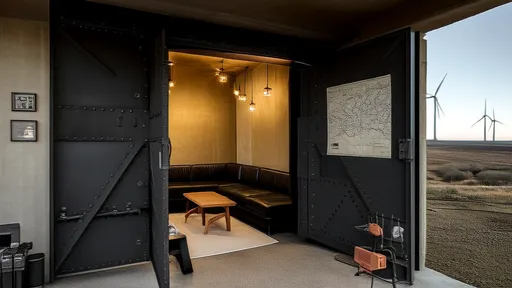
The concept of converting missile silos into habitable spaces isn't entirely new, but recent years have seen a surge in sophisticated adaptations. Architects and developers are embracing the raw, brutalist aesthetics of these structures while infusing them with modern comforts. The result is a striking juxtaposition of military pragmatism and contemporary design—thick concrete walls meet sleek furnishings, and blast doors give way to sunken lounges with curated art collections.
One such project, the Atlas Survival Bunker, has gained international attention for its ambitious scale. Originally built to house Titan II intercontinental ballistic missiles, the decommissioned site now offers private residences that descend nearly 150 feet underground. The design preserves much of the original architecture, including the massive 8-ton blast door, now reframed as a dramatic entryway. Natural light filters through strategically placed skylights, creating an interplay between the bunker’s oppressive history and its new life as a serene retreat.
The appeal of these spaces lies not just in their novelty, but in the narrative they embody. Each silo carries the weight of 20th-century geopolitics, a tangible relic of an era when the threat of mutual annihilation shaped global discourse. By repurposing them, owners and designers engage in a form of architectural alchemy, turning symbols of fear into spaces of contemplation and even whimsy. One converted silo in New York State features a glass-bottomed swimming pool suspended above the missile launch tube, offering swimmers a vertiginous view into the abyss below.
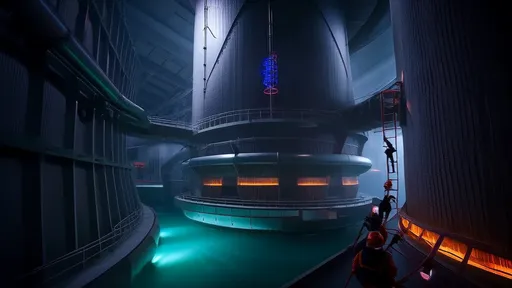
From a practical standpoint, the structures present unique challenges. The cylindrical layouts, engineered for functionality rather than comfort, demand creative spatial solutions. Designers often employ circular furniture arrangements and vertical storage to maximize the constrained footprints. Temperature regulation is another hurdle—the natural insulation that once protected warheads now requires advanced HVAC systems to maintain livable conditions. Yet these constraints have spurred innovation, yielding interiors that feel both futuristic and deeply grounded in their historical context.
Beyond their aesthetic and historical value, silo conversions speak to broader cultural shifts. In an age of climate uncertainty and renewed global tensions, there’s a growing fascination with resilient architecture. The bunkers’ ability to withstand extreme conditions resonates with contemporary anxieties, making their transformation all the more poignant. Some owners lean into this duality, incorporating survivalist elements like hydroponic gardens and backup generators alongside luxury amenities.
The trend has also sparked debate within preservation circles. While some applaud the adaptive reuse of these industrial relics, others argue that the conversions sanitize their darker histories. Purists maintain that silos should remain untouched as museums or memorials. Developers counter that repurposing ensures their survival, as maintenance costs for unused structures are prohibitively high. The most thoughtful projects strike a balance, retaining key architectural features while adding interpretive elements that educate guests about the sites’ original purposes.
For travelers, a night in a missile silo offers more than just Instagram-worthy backdrops. The experience is inherently immersive, blurring the line between hospitality and historical reenactment. Some properties lean into the theatrical potential, offering "launch protocol" simulations or curated soundscapes of period radio broadcasts. Others emphasize tranquility, positioning the thick concrete walls as the ultimate barrier against the noise of modern life.
As the movement matures, it’s expanding beyond private residences to include community-focused projects. A collaborative effort in Arizona has transformed a silo complex into an artist residency program, with studios occupying the former control rooms and maintenance bays. The cold, industrial spaces have proven surprisingly conducive to creativity, their austere environments serving as blank slates for artistic intervention. Similarly, educational institutions have begun repurposing decommissioned sites as immersive classrooms for history and engineering students.
The economics of silo conversions remain niche but viable. With purchase prices for decommissioned sites ranging from $200,000 to $2 million depending on condition and location, the initial investment is substantial. However, the uniqueness of the product commands premium rates—nightly stays often exceed $1,000, appealing to high-end travelers seeking exclusivity. Some developers have adopted hybrid models, combining short-term rentals with event spaces to maximize revenue.
Looking ahead, the trend shows no signs of slowing. As more Cold War-era facilities are decommissioned, the inventory of convertible structures grows. Design approaches are evolving too, with recent projects experimenting with more radical interventions—one proposal envisions a silo topped with a transparent biodome, creating a greenhouse effect for the levels below. What began as a fringe experiment has matured into a legitimate architectural subgenre, redefining how we interact with the physical legacies of conflict.
Ultimately, the missile silo renaissance represents more than clever real estate plays. These projects embody a cultural reckoning with the 20th century’s darkest chapters, finding light in the unlikeliest of places. By transforming instruments of destruction into spaces of refuge and creativity, they offer a powerful metaphor for resilience—and perhaps, a roadmap for repurposing other problematic monuments across the globe.