King Penguins of South Georgia
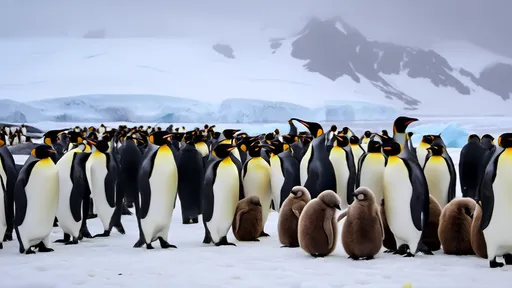
On the remote, windswept shores of South Georgia Island, a remarkable spectacle unfolds each austral spring as thousands of King Penguins return to their breeding grounds. These majestic birds, second only to the Emperor Penguin in size, create bustling colonies that transform the stark subantarctic landscape into a vibrant tapestry of life. Standing nearly three feet tall with striking orange-gold plumage adorning their heads and necks, King Penguins possess a regal bearing that fully justifies their name. Their colonies echo with a cacophony of trumpet-like calls as parents and chicks communicate across the crowded beaches, creating one of the most extraordinary wildlife experiences on our planet.
The life cycle of the King Penguin represents one of nature's most extraordinary adaptations to harsh environments. Unlike many bird species that complete their breeding cycle within a single season, King Penguins employ a unique breeding strategy that spans over thirteen months from courtship to fledging. This extended timeline means that colonies contain birds at various stages of breeding throughout the year, with some pairs incubating eggs while others are feeding rapidly growing chicks. The timing is crucial - chicks that hatch too late in the season may not develop their waterproof plumage before winter arrives, facing almost certain mortality when their parents must abandon them to survive the harsh winter months at sea.
King Penguin chicks undergo one of the most dramatic transformations in the animal kingdom. Initially covered in thick brown down that provides essential insulation, they gradually develop their juvenile plumage through a process that early explorers mistakenly described as "cactus penguins" due to their bizarre, spiky appearance during molting. These fluffy "oakum boys," as sailors once called them, must accumulate substantial fat reserves to survive the long winter fast when their parents journey hundreds of miles to feed. The sight of these oversized, downy chicks standing patiently in nursery groups while awaiting their parents' return remains one of the most endearing images of Antarctic wildlife.
The marine world of the King Penguin is as fascinating as their terrestrial existence. These remarkable birds are built for aquatic life, with streamlined bodies that can reach depths of over 300 meters in pursuit of their preferred prey - lanternfish and squid. Their diving capabilities border on the supernatural, with recorded dives lasting up to ten minutes as they hunt in the cold, nutrient-rich waters of the Antarctic Convergence. Special adaptations including solid bones for reduced buoyancy, enhanced oxygen storage capacity in their blood and muscles, and the ability to reduce metabolic functions during deep dives make them perfectly suited to their marine hunting lifestyle.
Climate change presents the most significant threat to King Penguin populations in South Georgia. These birds depend heavily on the Antarctic Polar Front, where cold southern waters meet warmer northern waters, creating ideal feeding conditions. As climate change causes this front to shift southward, the distance between breeding colonies and feeding grounds increases dramatically. Research indicates that if current warming trends continue, nearly 70% of King Penguins may need to abandon their traditional breeding sites or face catastrophic breeding failure. The delicate balance that has sustained these colonies for millennia is now threatened by human-induced climate changes occurring thousands of miles away.
Historical exploitation nearly wiped out South Georgia's King Penguins during the late 19th and early 20th centuries. Whalers and sealers harvested enormous numbers of these birds for their oil, with a single adult penguin yielding nearly a liter of high-quality oil. The devastation was so extensive that several colonies were completely exterminated, while others saw their numbers reduced to mere remnants. The establishment of protection measures and the decline of the oil industry allowed populations to begin their slow recovery, though some colonies never returned to their former size. This dark chapter in human-penguin interaction serves as a sobering reminder of our capacity to destroy what we should protect.
Modern conservation efforts have implemented sophisticated monitoring programs to track King Penguin populations and health. Researchers use satellite imagery to count colonies, deploy GPS trackers to understand foraging patterns, and conduct regular health assessments to monitor the birds' condition. These studies have revealed surprising information about their migratory patterns, including the discovery that some King Penguins undertake remarkable circular journeys covering thousands of kilometers during the non-breeding season. The data collected informs conservation strategies and helps scientists understand how climate change and commercial fishing might be affecting these iconic birds.
The social structure of King Penguin colonies demonstrates complex avian society. These birds employ a sophisticated system of vocal recognition that allows parents and chicks to find each other among thousands of identical-looking birds. Each penguin's call contains unique acoustic signatures that family members learn to recognize. The colonies also develop intricate social hierarchies and territorial arrangements, with established breeding pairs often returning to the same small patch of ground year after year. Their social bonds, particularly between mating pairs, can last for multiple breeding seasons, with individuals demonstrating clear recognition of their partners even after months of separation at sea.
King Penguins face numerous natural predators despite their substantial size. In the ocean, Leopard seals patrol the waters near colonies, waiting to ambush unwary birds as they enter or leave the sea. Giant petrels and skuas prey on eggs and vulnerable chicks, while the harsh subantarctic climate itself claims many lives during severe storms. The penguins have developed collective defense strategies, including entering and leaving the water in groups to minimize individual risk. On land, their primary defense is the security of numbers - by nesting in massive colonies, they ensure that predators can only take a small percentage of the population.
The economic value of King Penguin tourism to South Georgia has created unexpected conservation incentives. Each year, expedition ships bring thousands of visitors to witness these magnificent birds in their natural habitat. This tourism generates significant revenue that supports conservation efforts and research programs. Strict guidelines govern visitor behavior to minimize disturbance, including maintaining specific distances and limiting group sizes. The breathtaking experience of standing near a King Penguin colony has turned many visitors into passionate advocates for Antarctic conservation, creating a virtuous cycle where economic interests align with environmental protection.
Scientific research continues to reveal surprising aspects of King Penguin biology and behavior. Recent studies have uncovered their remarkable navigation abilities, using the sun position, Earth's magnetic field, and possibly even specific olfactory cues to find their way across featureless ocean. Their sleep patterns have been shown to include thousands of micro-naps throughout the day rather than continuous sleep periods. Perhaps most astonishingly, researchers have discovered that King Penguins can recognize themselves in mirrors, a cognitive ability previously documented in only a handful of animal species. Each new discovery adds another layer to our understanding of these complex, intelligent birds.
The future of South Georgia's King Penguins remains uncertain but not without hope. Conservation organizations work tirelessly to protect critical marine areas and reduce human impacts on their environment. International agreements now provide protection for significant portions of their foraging ranges, while continued monitoring ensures early detection of population changes. The resilience these birds have demonstrated since the end of commercial exploitation suggests they can recover if given adequate protection and if global climate change can be mitigated. Their survival matters not just for the species itself, but for the entire ecosystem of the Southern Ocean, where King Penguins serve as both predators and prey in the delicate balance of polar life.
Visitors fortunate enough to witness South Georgia's King Penguin colonies often describe the experience as transformative. The sight of these elegant birds set against a backdrop of glaciers and mountains, the sound of their calls carrying on the polar wind, and the awareness of the extraordinary life journey each bird undertakes creates a profound connection to the natural world. In an age of environmental challenges, the King Penguin stands as both a symbol of nature's resilience and a reminder of our responsibility to protect the wonders of our planet for generations yet to come.