Artist Residency Program: Revitalizing Hollow Villages with Murals
Nestled among the rolling hills of rural China, a quiet revolution is taking place. Once-thriving villages, now hollowed out by urban migration, are being reborn through an unexpected medium: art. Under the innovative Artist Residency Program, contemporary muralists are turning fading walls into vibrant canvases, weaving together tradition and modernity in a visual dialogue that resonates far beyond the countryside.
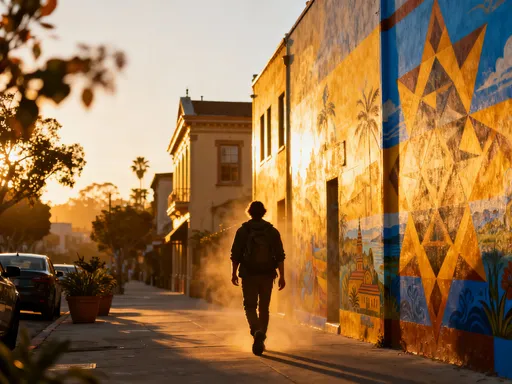
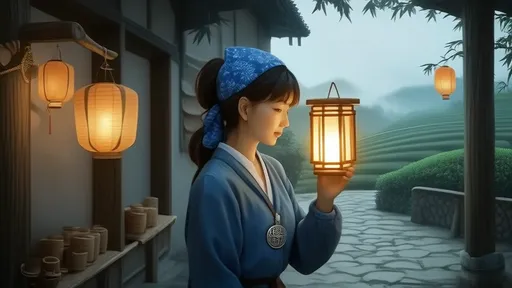
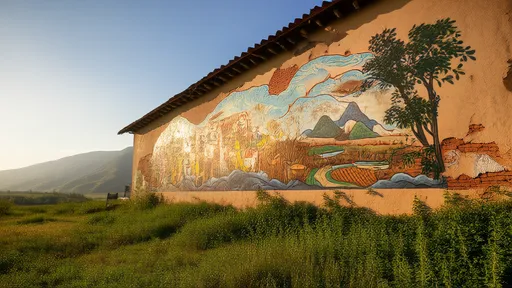
In Jiangxi Province’s Xucun Village, where nearly 70% of homes stood empty a decade ago, the cracked plaster of abandoned houses now dances with color. Local folklore springs to life in sweeping brushstrokes—a peasant woman harvests tea leaves beside a surrealist sun, children chase mythical beasts through rice fields rendered in pointillist dots. These aren’t mere decorations; they’re cultural anchors, created through months of collaboration between artists and remaining elderly residents who share oral histories over steaming cups of bitter melon tea.
The program’s genius lies in its dual approach. While internationally renowned artists like Zhang Xiaogang contribute large-scale installations, emerging local talents receive mentorship to develop hyper-localized works. In Anhui’s Hongcun, a 23-year-old art school graduate spent six months studying Ming Dynasty woodcarvings before translating their intricate patterns into a 40-meter water-themed mural that doubles as a flood level marker—a functional homage to the village’s centuries-old hydraulic wisdom.
Beyond aesthetics, these interventions are sparking tangible change. In Zhejiang’s Lishui region, three mural-adorned villages saw tourism revenue increase by 300% within two years. More remarkably, census data shows young families beginning to return, drawn by new guesthouses and artisanal workshops capitalizing on the artistic buzz. The murals serve as both economic catalyst and emotional bridge; when 68-year-old farmer Li Wenshu saw his childhood home transformed into a canvas depicting village legends he’d almost forgotten, he reportedly whispered, “The ancestors have come back to us.”
Critics initially dismissed the project as rural cosmetic surgery, but the depth of community engagement has silenced most skeptics. Artists undergo mandatory cultural immersion—learning dialect phrases, participating in harvest festivals—before sketching begins. In Fujian’s tulou earth buildings, Hakka grandmothers vetoed initial designs as “too loud,” steering artists toward the muted mineral pigments used in their traditional embroidery. The resulting murals feel less like imposed art and more like visual translations of collective memory.
As the program enters its fifth year, unexpected collaborations are emerging. Tech companies are funding AR components where visitors’ smartphones unlock animations explaining mural symbolism. Agricultural colleges study how the bright pigments affect crop growth on adjacent plots. Most profoundly, the initiative has inspired similar projects in post-industrial towns across Liaoning and Shanxi, proving that the alchemy of art and abandoned spaces isn’t limited to rural contexts.
The true measure of success may lie in the stories not captured by economic reports. Like the Shanghai banker who canceled her emigration plans after visiting her ancestral village’s new murals, or the group of left-behind children who started a guided tour business using scripts they wrote about the artworks. In making space for beauty where others saw only decline, these painted villages are rewriting China’s narrative of rural decay—one brushstroke at a time.