Chai Kiln Drone: Aerial Monitoring of Ancient Porcelain Firing Techniques
The ancient art of Chinese porcelain making has entered an unexpected partnership with modern drone technology, creating what kiln masters are calling a "revolution in ceramic heritage preservation." At the heart of this innovation lies the Chai Kiln drone system - specialized unmanned aerial vehicles designed specifically for monitoring the delicate wood-firing process of traditional porcelain production.
For nearly two millennia, the secrets of perfect porcelain emerged from the smoky interiors of dragon kilns winding up hillsides across Jiangxi province. The legendary Chai kilns, named after the Five Dynasties period Emperor Chai Rong who supposedly demanded "sky-clearing blue" ceramics, represent the pinnacle of this tradition. Yet mastering the 1,300°C firing process has always relied on generations of accumulated wisdom, with master potters judging heat distribution by the color of flames and listening for subtle changes in the kiln's roar.
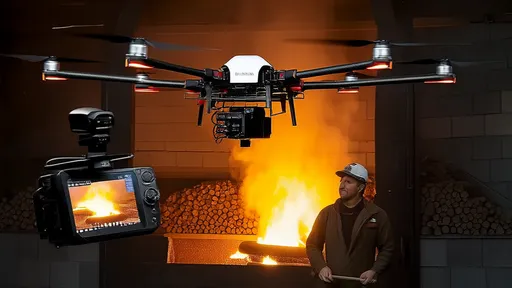
Now, thermal imaging drones hover like mechanical firebirds above these ancient kilns, transmitting real-time heat maps to technicians monitoring tablets. The system developed by Jingdezhen Ceramic University doesn't replace traditional methods but augments them, creating a digital memory of successful firings. "It's like giving our kiln masters X-ray vision," explains Professor Zhang Wei, lead researcher on the project. "The drones see heat patterns human eyes cannot detect, while our algorithms compare current firings to historical ideal profiles."
The technology arrived none too soon for China's ceramic heritage. With fewer young artisans willing to endure the 72-hour firing vigil shifts (where masters must feed wood precisely every 15 minutes), the drone system acts as both training tool and safety net. During a recent firing at the restored Imperial Kiln complex, thermal anomalies detected by drones allowed adjustments that saved a batch replicating Ming dynasty blue-and-white ware worth over ¥2 million.
What makes the Chai Kiln drones unique is their specialized adaptation to ceramic workflows. Standard industrial drones failed in the kiln environment - intense heat distorted their sensors, while rising ash clogged mechanisms. The current models feature ceramic-coated heat shields, self-cleaning air filters, and algorithms that account for wood-burning variability. Most remarkably, they've learned to "read" the kiln's condition through combinations of thermal, visual, and audio analysis - recognizing the crackle of ideal reduction atmospheres or the infrared signature of developing glaze effects.
Local kiln masters initially resisted the technology. "Porcelain making is an art, not a science experiment," grumbled Master Liu Yongde, sixth-generation kiln operator at the historic Hutian site. But after drones helped him recreate a long-lost peachbloom glaze formula, even traditionalists acknowledge their value. The breakthrough came when Liu's team cross-referenced drone data with his grandfather's handwritten firing notes from the 1930s, uncovering subtle temperature oscillations critical to the glaze's signature blush.
The implications extend beyond heritage preservation. At the industrial Hongye Porcelain factory, drone-assisted firings have reduced energy waste by 18% while increasing premium-grade output. "We're burning less wood to achieve better results," says production manager Zhou Feng. "It's ancient wisdom meeting modern precision." Even environmental inspectors approve - the drones' emissions monitoring helps kilns comply with China's tightening air quality standards without compromising traditional methods.
Perhaps most poetically, the drones themselves incorporate ceramic components 3D-printed from recycled kiln waste. Their rotors hum the same frequency as wind through ancient kiln chimneys, a coincidence that amuses the old craftsmen. As Master Liu observes while watching a drone hover above his latest celadon firing: "The phoenix was reborn from fire - now our kilns give birth to mechanical birds that help us remember."
Looking ahead, researchers are developing drone swarms that could map entire kiln complexes, and AI systems that might predict optimal wood-feeding times. But the human element remains central. As Professor Zhang emphasizes: "The drones don't make porcelain - they help the hands that do see what generations of masters could only feel." In an era where smart technology often disrupts tradition, the Chai Kiln drones offer a rare harmony - letting one of civilization's oldest art forms soar into the future.