Greenland Ice Fjord
Deep within the Arctic Circle, where the air carries the crisp scent of ancient ice and the silence is broken only by the occasional calving of a glacier, lies the Greenland Ice Fjord. This is not merely a geographical feature; it is a living, breathing entity of ice, a dynamic landscape that tells a story of planetary history, present fragility, and an uncertain future. To stand at the edge of such a place is to witness the raw, untamed power of nature, a spectacle that humbles and terrifies in equal measure.
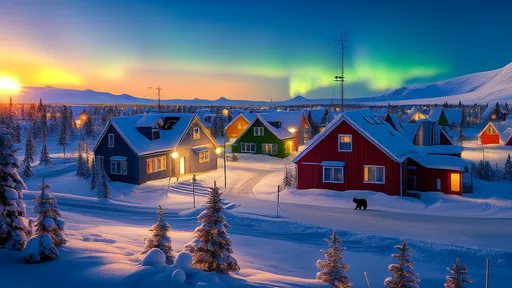
The journey to the ice fjord, particularly the Ilulissat Icefjord, a UNESCO World Heritage site, begins long before one lays eyes on the ice. The town of Ilulissat itself, with its colorful houses perched on rocky outcrops, serves as a gateway. From here, the scale of the phenomenon starts to dawn. The fjord is the seaward end of the Sermeq Kujalleq glacier, one of the fastest and most productive glaciers in the world. It is an ice river, flowing from the vast Greenland ice sheet at a staggering pace, discharging over 35 cubic kilometers of ice into the ocean each year. This is not a slow, creeping movement but a constant, forceful procession.
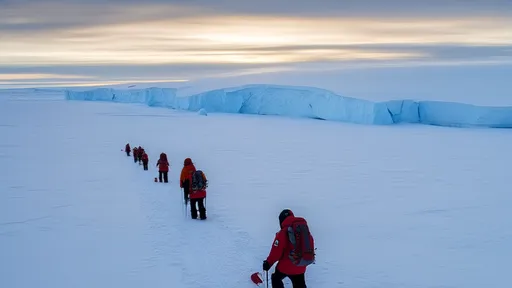
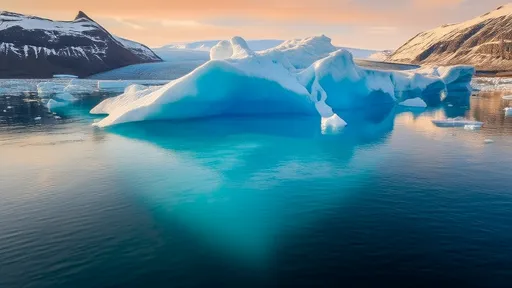
The sheer scale of the ice is the first thing that assaults the senses. The term 'iceberg' feels inadequate for the monumental structures that break away from the glacier's face. These are not the small, pristine chunks one might imagine; they are colossal, cathedral-like islands of ice, some towering over a hundred meters above the waterline, with the vast majority of their mass hidden ominously beneath the dark, frigid waters. Their colors are a mesmerizing palette of the Arctic: brilliant, blinding white where the sun strikes fresh fractures, deep, profound blue where ancient, compressed ice is exposed, and sometimes streaks of black, the cryoconite—dust and soot—that speaks of a wider, polluted world.
The soundscape is equally profound. The silence of the Arctic is a myth. The fjord is alive with noise. There is a constant, low groaning, a deep-seated rumble that seems to emanate from the very heart of the glacier. This is the sound of ice under immense pressure, shifting, grinding, and moving. And then, without warning, comes the thunder. The calving of an iceberg is an event of biblical proportions. A crack, sharper than a rifle shot, echoes across the water, followed by a roar as a vast wall of ice detaches, tumbles, and crashes into the sea. The resulting wave rocks boats hundreds of meters away, a physical reminder of the energy released in that single, violent moment. The new iceberg, now born into the ocean, begins its slow, stately dance with the currents.
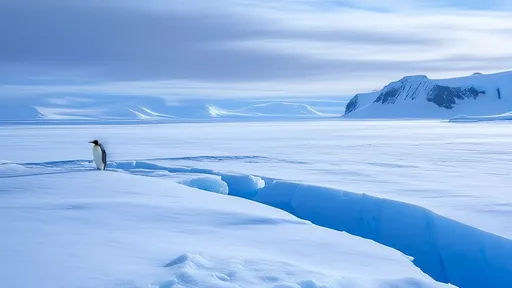
Beyond the immediate sensory overload, the Greenland Ice Fjord is a critical scientific barometer for our changing climate. Scientists from around the globe maintain a vigilant watch here, for the behavior of the Sermeq Kujalleq glacier is a key indicator of the health of the entire Greenland ice sheet. The acceleration of its flow and the increase in calving rates are directly linked to rising atmospheric and ocean temperatures. The fjord is a front line in the climate crisis. The dark water, absorbing more solar heat than reflective ice, creates a feedback loop, warming and further eroding the glacier from below. The very presence of open water in the fjord, where solid ice once prevailed, is a testament to a warming world.
This glacial activity has profound global implications. The ice discharged from this single fjord contributes significantly to global sea-level rise. The freshwater it injects into the North Atlantic has the potential to disrupt the great ocean conveyor belt, the system of deep-ocean currents that regulates climate patterns across Europe and beyond. The fate of this remote, icy landscape is inextricably linked to the fate of coastal cities and agricultural zones thousands of miles away. It is a stark, sobering realization that the destiny of Miami, Shanghai, and London is being written, in part, on the fractured face of a glacier in Greenland.
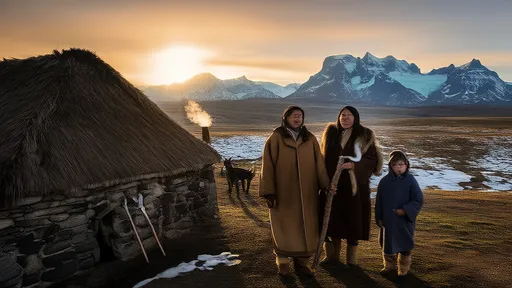
For the local Inuit communities, the ice fjord is not just a spectacle or a data point; it is woven into the fabric of their culture and survival. For generations, they have navigated these treacherous waters, hunting and fishing in a landscape they know with an intimacy that science can only aspire to. They have their own names for the different types of ice and a deep, ancestral understanding of the rhythms of the frozen world. Today, they find themselves at a crossroads. The ice is becoming more unpredictable, the traditional hunting seasons are shifting, and the very foundation of their way of life is melting beneath their feet. Their observations, passed down through oral history, provide a human-scale narrative that corroborates the cold, hard data of climate models.
The future of the Greenland Ice Fjord hangs in a delicate balance. The processes underway are now largely self-sustaining, driven by the momentum of a warming climate. Even with immediate and drastic reductions in greenhouse gas emissions, the ice will continue to retreat for centuries to come. The fjord of tomorrow will look vastly different from the fjord of today. It will be wider, deeper, and filled with even more ice. The question is not if it will change, but how rapidly and to what ultimate endpoint. Will it become a largely ice-free channel, or will it continue to be a conveyor of ice from the shrinking interior?
Visiting the Greenland Ice Fjord today is a privilege that carries a weight of responsibility. It is to see a world of sublime beauty that is simultaneously a monument to a planet in flux. The towering icebergs, while majestic, are also tombstones for ice that accumulated over hundreds of thousands of years. The thunderous calving is both a natural wonder and a warning siren. It is a place that defies simple description, a landscape that evokes awe for its power and grief for its fragility. In the end, the story of the Greenland Ice Fjord is our story—a testament to the indelible mark humanity is leaving on the last great wildernesses of the Earth.