Indigo Digital Revolution: AI Pattern Generation in Traditional Handwoven Workshops
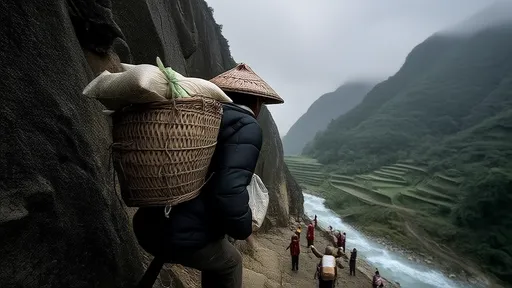
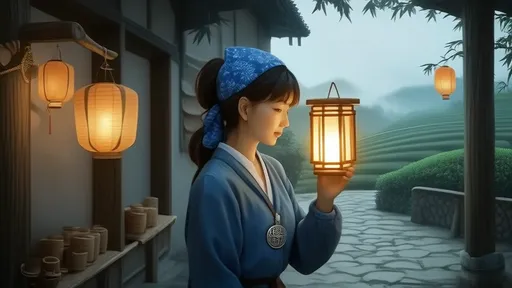
In the misty mountains of southern China, a quiet revolution is unfolding in the unlikeliest of places – rural textile workshops where generations of artisans have hand-dyed indigo fabrics using techniques dating back to the Ming Dynasty. What began as an effort to preserve intangible cultural heritage has blossomed into something far more ambitious: a groundbreaking fusion of artificial intelligence and traditional craftsmanship that's redefining the possibilities of textile design.
The project, spearheaded by a collective of ethnomathematicians and machine learning specialists working alongside master dyers, represents one of the most unexpected applications of generative AI in the creative industries. At its core lies a simple but profound question: Can algorithms learn the visual language of indigenous textile patterns well enough to create new designs that remain culturally authentic while pushing the boundaries of tradition?
From Loom to Algorithm
Traditional indigo dyeing, known locally as lanran (蓝染), involves intricate resist-dyeing techniques where fabrics are folded, tied, or clamped before being submerged in vats of fermented indigo. The resulting patterns – ranging from delicate floral motifs to dramatic geometric compositions – carry deep cultural significance, with certain designs reserved for specific ceremonies or social statuses.
The research team spent eighteen months documenting over 3,000 historical textile samples from museum collections and private workshops across Guizhou and Yunnan provinces. Each pattern was digitized and analyzed not just as an image, but as a mathematical representation of symmetry groups, topological features, and color gradations. This database became the training set for a custom-built generative adversarial network (GAN) specifically adapted to work within the constraints of traditional dyeing techniques.
The Artisan-AI Collaboration
What makes this initiative remarkable isn't just the technological achievement, but the collaborative process that developed between the AI system and master artisans. Early attempts at purely algorithmic designs often produced visually striking patterns that proved impossible to execute with traditional tying and folding methods. The breakthrough came when researchers realized the AI needed to understand not just what the patterns looked like, but how they were made.
By incorporating parameters from the physical dyeing process into the model – the way fabric stretches when folded, how indigo penetrates layers of cloth, the natural variations in handmade resists – the system began generating designs that were both innovative and technically feasible. Master dyers then refined these digital patterns through an iterative process, making subtle adjustments that no algorithm could anticipate, like accounting for how a particular batch of indigo might bleed differently in humid weather.
The results have been extraordinary. One workshop in a remote Guizhou village recently produced a series of textiles featuring complex fractal-like patterns that maintain the visual language of traditional Miao embroidery while introducing mathematical concepts never before seen in the craft. Another collective has begun experimenting with AI-generated gradient designs that mimic the organic imperfections of hand-dyeing while achieving color transitions previously thought impossible with natural indigo.
Cultural Preservation Through Innovation
Far from replacing traditional methods, this technological integration is breathing new life into endangered artisanal practices. Younger generations who might have dismissed textile work as outdated are flocking to workshops to learn the craft, drawn by the exciting possibilities of merging ancestral knowledge with cutting-edge technology. The project has also attracted attention from major fashion houses and interior designers, creating new economic opportunities for rural communities.
Perhaps most importantly, the AI system has become an unexpected tool for cultural preservation. By analyzing patterns across centuries and regions, the technology has helped identify nearly extinct design lineages and even suggested plausible reconstructions of fragmentary historical textiles. In one poignant instance, the system generated a series of patterns that elderly artisans immediately recognized as variations of designs their grandparents had made – patterns thought lost to time.
As the project expands to include other traditional textile techniques across Asia, it offers a compelling model for how artificial intelligence might serve as a bridge between past and future – not by imposing foreign aesthetics or industrial efficiency, but by deepening our understanding and appreciation of humanity's diverse creative heritage. In the indigo vats of these mountain workshops, the digital and the analog have found rare harmony, proving that technological progress and cultural continuity need not be opposing forces.