Immigrant Food Districts: Cross-National Menus of Home Kitchens"
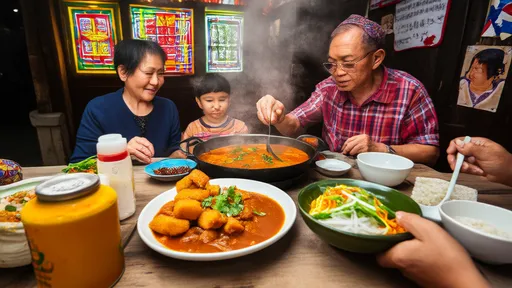
In the heart of every immigrant neighborhood, there exists a culinary crossroads where the aromas of distant homelands mingle with the rhythms of new lives. These unassuming family-run kitchens—often tucked between laundromats and discount stores—have become the keepers of transnational recipes, where grandmothers measure spices by intuition and children translate menus for curious outsiders. What emerges is not merely a collection of ethnic eateries, but living archives of migration stories told through simmering pots and well-worn rolling pins.
The steam rising from a pot of Vietnamese pho in suburban Paris carries more than the scent of star anise and bone broth—it whispers of French colonial history, postwar refugee resettlement, and the quiet resilience of families who rebuilt their culinary traditions in housing project kitchens. Similarly, the golden crust of a Polish pierogi in Chicago’s Avondale neighborhood holds layers of meaning: the desperation of economic migrants, the ingenuity of adapting Central European ingredients to Midwestern pantries, and the pride of third-generation cooks who still knead dough using their great-grandmother’s technique.
What makes these immigrant kitchens extraordinary is their inherent duality—they simultaneously preserve and innovate. A Syrian cook in Berlin might stuff falafel with local beetroot to appeal to German palates while keeping the cumin-heavy spice blend from Aleppo unchanged. In Toronto’s Kensington Market, a Jamaican patty vendor has started using Ontario squash in the filling but would never compromise on the fiery Scotch bonnet pepper marinade that defines jerk chicken. This delicate balance between preservation and adaptation creates dishes that exist nowhere else on earth—culinary hybrids shaped by geopolitics, supply chains, and the universal human craving for familiar flavors.
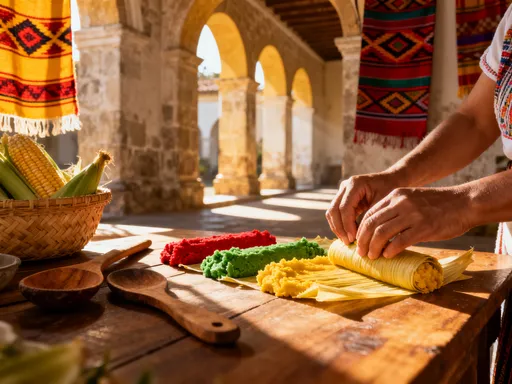
The economics of these family operations reveal another dimension. Unlike restaurant chains with standardized recipes, immigrant kitchens often function as informal banks of cultural capital. A Mexican tortilleria in Los Angeles might extend credit to newly arrived families from Puebla, while a Korean banchan stall in Queens becomes the hub for job leads and apartment rentals. The food itself circulates as currency—Ukrainian borscht traded for Filipino adobo in apartment building hallways, Afghan bolani shared with Somali neighbors during Ramadan. These transactions build parallel economies where recipes become social contracts.
Children of immigrants frequently become the architects of menu innovation, blending their parents’ traditional techniques with culinary school training or food science knowledge. At a Peruvian-Chinese chifa in Lima, the second-generation chef might experiment with sous-vide cooking on classic lomo saltado while insisting the wok hei (breath of the wok) technique remains untouched. In Melbourne, the daughters of Lebanese migrants have introduced native Australian wattleseed into ma’amoul cookies while keeping the rosewater syrup exactly as their Damascus-born grandmother prepared it. This intergenerational negotiation creates menus that evolve without erasing their origins.
Language barriers often shape these culinary landscapes in unexpected ways. Simplified menu descriptions—"spicy pork noodles" instead of "szechuan dan dan mian"—lead to new dish interpretations that take on lives of their own. A Bengali cafeteria in Milan might list "fried rice balls" instead of the correct term "telebhaja", creating an entirely new street food category that Italian customers now request by name. These accidental reinventions sometimes circle back to countries of origin, where returning migrants introduce the adapted versions to their ancestral villages.
The pandemic revealed how deeply these kitchens anchor communities. When lockdowns shuttered restaurants, immigrant cooks transformed their apartments into clandestine meal hubs—Ukrainian dumplings delivered with prescriptions for elderly neighbors, Oaxacan mole packets left in building lobbies for laid-off workers. This underground culinary network sustained both bodies and spirits, proving that the most vital immigration policy might be written in recipe cards rather than legislation. As borders hardened, the smell of caramelizing onions and toasted spices continued to travel freely between apartments.
Food historians note that today’s immigrant kitchens differ from previous waves in their hyperconnectivity. A Congolese cook in Brussels can videochat with cousins in Kinshasa to troubleshoot ndakala fish stew, while a Pakistani chef in Houston orders besan flour via WhatsApp from a Karachi supplier. This real-time culinary dialogue accelerates the evolution of dishes, creating what anthropologists call "fast-forward fusion"—where recipes that might have taken generations to adapt now transform within years. The result is menus that reflect both deep tradition and rapid globalization.
Yet for all their adaptability, these kitchens guard certain untouchable elements—the particular grind of chickpeas for Sicilian panelle in Brooklyn, the exact shade of golden brown on Iraqi kleicha cookies in Stockholm. These become the culinary equivalent of heirloom jewels, physical manifestations of identity in environments where language fluency and citizenship status may feel unstable. To alter these elements would be to surrender more than flavor—it would mean losing edible landmarks in the confusing geography of displacement.
As urban gentrification threatens many immigrant enclaves, these family kitchens have become unexpected preservationists. The recipe for Bangladeshi shutki maach (fermented fish) in London’s Brick Lane now carries the added weight of cultural resistance against rising rents. A Puerto Rican lechonera in the Bronx doubling as a community meeting space fights displacement simply by continuing to stuff plantains with picadillo as it has since 1978. In this context, every served plate becomes an act of defiance, a declaration that some flavors cannot be priced out of existence.
The true magic of these transnational menus lies in their ability to comfort twice over—first by recreating the tastes of lost homelands, then by weaving those flavors into the fabric of new communities. A single bite of Persian ghormeh sabzi stew in Vancouver contains both the orchards of Isfahan and the rain-soaked herb gardens of British Columbia. These are not fusion foods in the trendy sense, but rather edible palimpsests where every ingredient tells multiple stories. They remind us that while borders may divide nations, shared meals will always negotiate their own diplomacy.