The End of the World in Tierra del Fuego
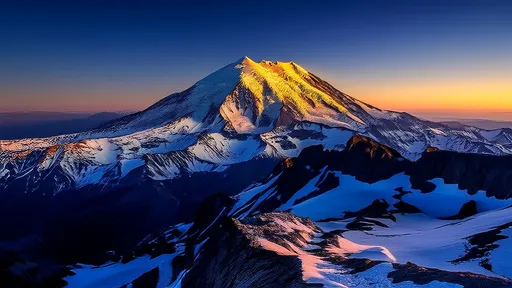
From the jagged peaks of the Andes to the windswept shores where two oceans collide, Tierra del Fuego exists as a land of extremes. The very name, bestowed by Ferdinand Magellan upon seeing the countless campfires of the indigenous Yámana people flickering in the perpetual twilight, means "Land of Fire." It is a place of stark contradictions, where fire and ice, civilization and untamed wilderness, meet in a dramatic and often unforgiving embrace. For centuries, this archipelago at the southern tip of South America has captured the imagination of explorers, convicts, and adventurers, serving as the literal and metaphorical end of the world.
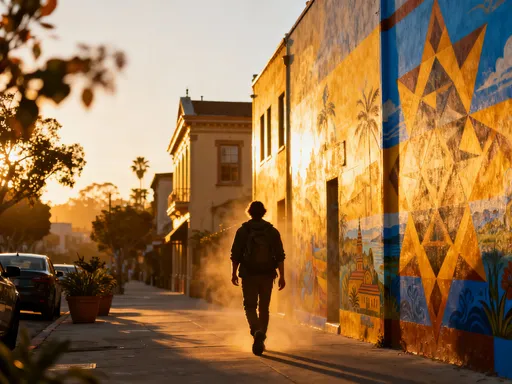
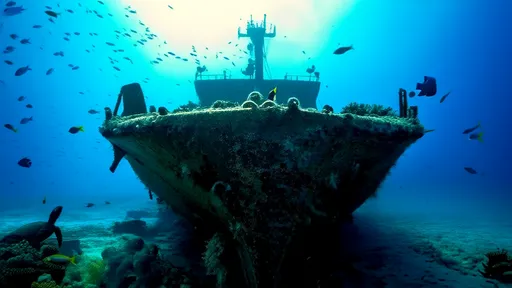
The journey to Ushuaia, the world's southernmost city, is itself a passage into another realm. The flight over the Patagonian steppe gives way to a breathtaking vista of glacial lakes and serrated mountain ranges. Upon landing, one is immediately struck by the air—crisp, clean, and carrying a faint, briny scent from the Beagle Channel. Ushuaia clings to the side of the mountains, a colorful mosaic of buildings painted in bright hues to combat the long, grey winters. Its main street, Avenida San Martín, buzzes with a unique energy, a mix of tourist curiosity and the hardened resilience of those who call this place home. It is a frontier town, its history written in the weathered faces of its inhabitants and the rusting hulls of old ships in the harbor.
This city was not born from gold rushes or agricultural promise, but from a far darker chapter. For much of the late 19th and early 20th centuries, Ushuaia was defined by its presidio, a notorious penal colony established by the Argentine government to exile its most dangerous criminals. The logic was simple and brutal: there was nowhere to escape to. To the north lay thousands of miles of impassable mountains and arid plains; to the south, the frigid, storm-wracked waters of the Drake Passage. The prisoners built the city with their own hands, felling trees and laying bricks in a climate that was a punishment in itself. The prison walls, now part of the fascinating End of the World Museum, still seem to echo with the ghosts of despair and isolation. Standing in a solitary confinement cell, one can feel the profound weight of being at the absolute edge of the known world, a place of banishment from which return was a near impossibility.
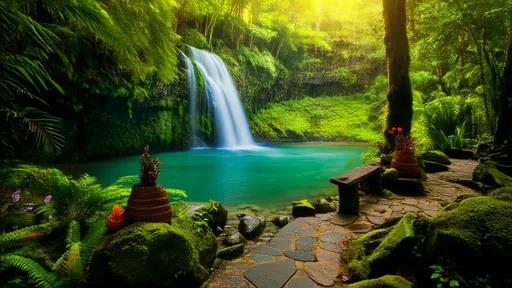
Yet, beyond the city's confines lies the true soul of Tierra del Fuego—the Tierra del Fuego National Park. Here, the dense subpolar forests, known as the Magellanic rainforest, create a landscape of profound, almost primordial, beauty. Hiking its trails is a sensory immersion. The ground is a soft, spongy carpet of peat and fallen leaves, muffling all sound. The air is thick with the scent of damp earth and the distinctive aroma of the lenga and ñire trees. Their branches, twisted and stunted by the constant wind, are draped with a pale green lace of "old man's beard" lichen, which hangs motionless in the still air of the forest interior. The silence is profound, broken only by the occasional call of a Magellanic woodpecker or the rush of a hidden stream.
At the end of one of these trails lies the Beagle Channel, a narrow, glacier-carved passage that slices through the archipelago. A boat journey on its cold, dark waters is essential to understanding the region's power. The channel is a highway for wildlife. Colonies of imperial cormorants blanket sheer cliff faces, while sea lions bask on rocky islets, their barks echoing across the water. The most poignant sight is often the Les Eclaireurs Lighthouse, the iconic "Lighthouse at the End of the World" (though often mistaken for the one from Jules Verne's novel). Standing solitary on a tiny, barren islet, its red and white stripes are a defiant symbol of guidance in a vast, indifferent seascape, a beacon at the very gateway to the Antarctic.
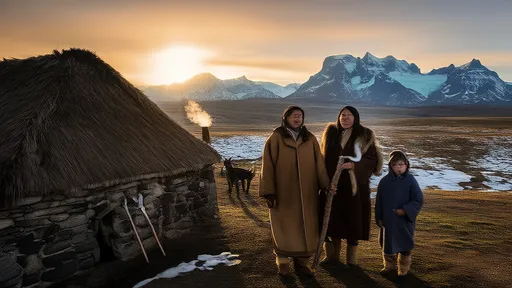
The indigenous peoples, the Selk'nam, Yámana, and Haush, possessed a deep, spiritual connection to this harsh land for thousands of years before European arrival. They were nomadic hunters and gatherers, supremely adapted to an environment that Europeans found hostile. The Yámana, in particular, thrived in the frigid waters, navigating the channels in canoes and maintaining near-naked bodies smeared with seal fat to insulate against the cold. Their worldview was intricately tied to the land, sea, and sky, a complex cosmology that saw life in every rock and wave. The arrival of whalers, missionaries, and settlers in the 19th century brought diseases and violence that decimated these populations, a tragic and irrevocable loss that casts a long shadow over the region's history. Their story is a stark reminder that this "end of the world" was, for them, the very center of it.
For the modern traveler, Tierra del Fuego represents the ultimate destination, the final checkmark on a map. To stand on the rocky shore at Bahía Lapataia, where the Pan-American Highway officially terminates after its 19,000-mile journey from Alaska, is to participate in a ritual of completion. There is a palpable sense of arrival, of having reached a geographical absolute. This feeling is amplified by the raw, elemental weather. Storms can roll in from the Antarctic with breathtaking speed, transforming a calm, sunny day into a maelstrom of wind and horizontal rain. The climate is not just a condition; it is a central character in the narrative of the place, a constant, humbling force that dictates all activity.
Ultimately, the enduring allure of Tierra del Fuego is not merely its geographical location. It is a landscape that forces introspection. In its vast, empty spaces and relentless elements, one confronts the fundamental themes of isolation, resilience, and the fragile relationship between humanity and the natural world. It is a place that has served as a prison, a home, a final frontier, and a symbol of journeys end. It is both a destination and a point of departure—the end of the familiar world and the beginning of the great, unknown southern wilderness. To visit Tierra del Fuego is to stand on the precipice, to look south from the edge of the map and feel the simultaneous thrill of finality and the irresistible pull of the vast, blue horizon beyond.