Cliff Village Supply Line: Vertical Transportation with Baskets"
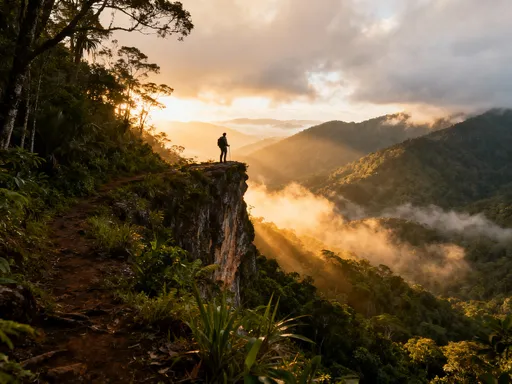
Nestled deep within the rugged mountains of China's Sichuan Province lies a remote village known as Cliff Village, or "Xuanya Cun" in Mandarin. Perched precariously on the edge of a sheer cliff, this isolated settlement has long been cut off from modern infrastructure, forcing its inhabitants to rely on an ancient and perilous supply line: the back-basket carriers who navigate a near-vertical path to deliver essential goods.
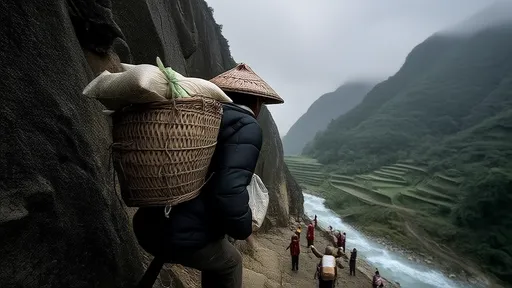
The journey to Cliff Village is not for the faint of heart. A narrow, winding path carved into the cliff face serves as the only connection between the village and the outside world. For generations, local porters have shouldered the responsibility of transporting everything from food and medicine to construction materials up this treacherous route. Their tool of choice? A simple bamboo back-basket, or "beilou," which has remained virtually unchanged for centuries.
These back-basket carriers form the lifeline of Cliff Village, undertaking daily journeys that would terrify most urban dwellers. The vertical climb spans over 800 meters in elevation, with some sections featuring makeshift ladders made of vines and wooden planks. A single misstep could send both porter and cargo tumbling into the abyss below. Yet, these resilient individuals make the trip multiple times a week, carrying loads that often exceed their own body weight.
The contents of these baskets tell the story of village life. Fresh vegetables, rice, and cooking oil share space with school textbooks and medical supplies. During construction seasons, carriers transport bags of cement and bundles of rebar piece by piece. Every nail, every brick, every sack of flour that reaches Cliff Village does so on human backs, moving up the mountain in a slow but steady procession.
What makes this supply chain truly remarkable is its efficiency despite its apparent fragility. The porters have developed an intricate system of weight distribution and route planning that allows them to maximize each trip. Younger carriers typically handle the more dangerous upper sections, while older, more experienced porters manage the base camps where goods are sorted and prepared for ascent. This division of labor has evolved organically over decades, creating a surprisingly effective logistics network.
During rainy seasons, the path transforms into a muddy slide, increasing the danger exponentially. Porters wrap their shoes in coarse cloth for better traction and move in single file, calling out warnings to each other about particularly slippery spots. The rhythm of their work continues regardless of weather - the village cannot afford to wait out storms when supplies run low.
The back-basket carriers have developed unique physical adaptations to their work. Their leg muscles are exceptionally strong, capable of powering up steep inclines with heavy loads. Their shoulders bear permanent marks from the bamboo straps, and their hands develop thick calluses from gripping the cliffside. Yet they move with a grace that belies the difficulty of their task, finding footholds invisible to untrained eyes.
In recent years, this ancient transportation method has attracted attention from urban journalists and documentary filmmakers. Their coverage has brought some improvements - safety ropes now line the most dangerous sections, and the government has provided better footwear. However, the fundamental reality remains unchanged: as long as Cliff Village exists in its current location, the back-basket supply line will continue to be its beating heart.
The cultural significance of this vertical supply chain extends beyond mere logistics. It represents a way of life that persists against all odds, a testament to human adaptability in extreme environments. The knowledge passed down through generations of porters - which vines make the strongest ladders, how to balance a shifting load mid-climb - constitutes an intangible heritage that no modern transportation system could replicate.
As China continues its rapid modernization, places like Cliff Village stand as reminders of the diverse realities coexisting within the country. While urban centers boast high-speed rail networks and drone delivery systems, this mountain community still depends on human strength and centuries-old techniques for survival. The back-basket carriers don't see themselves as heroes - just villagers doing what needs to be done to keep their community alive.
The future of Cliff Village's vertical supply line remains uncertain. Talks of building a cable car or carving a proper road have circulated for years, but the extreme terrain and high costs have prevented any major projects. For now, the rhythmic sound of bamboo baskets creaking under weight continues to echo through the mountains, a living tradition that connects past and present with every arduous climb.