New Chapter of Papermaking Village: Design Journey of Mulberry Bark Paper Lanterns"
In the heart of a centuries-old papermaking village, a quiet revolution is taking place. The ancient craft of mulberry bark paper, once teetering on the brink of obscurity, has found new life through an unexpected medium—lighting design. This renaissance isn’t just about preserving tradition; it’s about reimagining it for contemporary spaces, blending heritage with modern aesthetics in ways that captivate designers and homeowners alike.
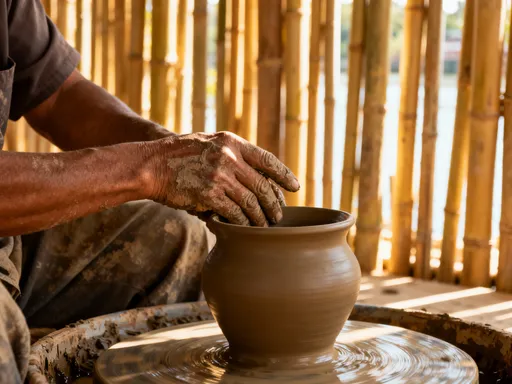
The journey begins with the raw material: mulberry bark, harvested from trees cultivated by generations of local farmers. For centuries, this resilient fiber has been transformed into durable, textured paper through a labor-intensive process passed down through families. What makes this material extraordinary isn’t just its tactile quality or environmental sustainability—it’s the way light interacts with its fibrous surface, casting warm, organic shadows that synthetic materials simply cannot replicate.
Designers collaborating with the village artisans describe the discovery as serendipitous. While experimenting with ways to showcase the paper’s natural beauty, they suspended hand-cut sheets around simple bulb fixtures. The effect was transformative. Unlike mass-produced lampshades that diffuse light uniformly, each mulberry paper creation tells a story through its imperfections—the subtle variations in thickness, the faint tracery of embedded leaves, or the occasional fleck of bark that catches the light like gold leaf.
What emerged from these experiments is a collection of lighting pieces that feel both timeless and avant-garde. A pendant lamp might resemble a floating cocoon, its layered strips of mulberry paper appearing weightless despite their sturdy construction. Floor lamps take inspiration from traditional lantern forms but reinterpret them with asymmetrical silhouettes that play with positive and negative space. The designs deliberately avoid minimalist perfection, instead celebrating the handmade character that gives each piece its soul.
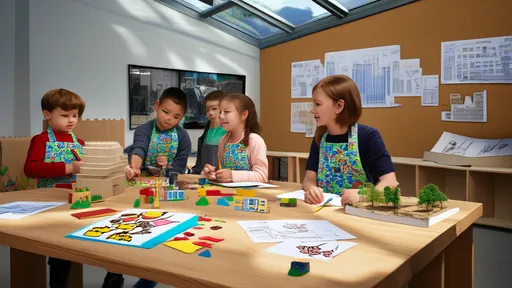
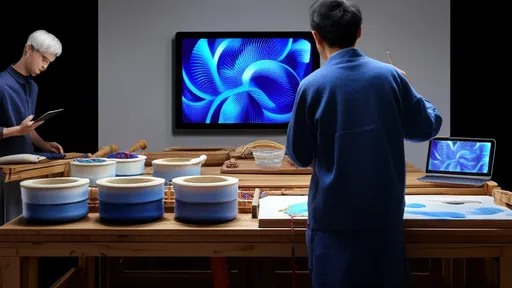
The process itself has become a dialogue between old and new. Young designers armed with 3D modeling software sit cross-legged on tatami mats alongside master papermakers who judge fiber quality by touch. Technical challenges arise—how to reinforce the paper’s structure without compromising its breathability, or how to scale production without sacrificing the distinctive irregularities that make each lamp unique. Solutions often come from unexpected fusions: a medieval paper-folding technique might inform a modern geometric pattern, or a smartphone’s color temperature app could help artisans fine-tune their bleaching methods.
Beyond aesthetics, this collaboration has sparked economic revitalization. The village’s papermaking workshops, which once struggled to compete with industrial manufacturers, now host waiting lists for their lighting collections. Younger generations who left for urban jobs are returning to apprentice in the craft, bringing fresh perspectives while learning ancestral techniques. One particularly striking outcome has been the "Paper Stories" series, where lamps incorporate recycled fragments from decades-old account books, letters, and even folk art prints—giving discarded materials a luminous second act.
Architects and interior designers have taken notice. Projects ranging from boutique hotels seeking authentic local flair to eco-conscious homeowners wanting sustainable statement pieces have incorporated these fixtures. The paper’s natural humidity regulation properties make it ideal for certain climates, while its biodegradability aligns with circular design principles. Perhaps most remarkably, the very fragility that once limited traditional paper’s applications—its sensitivity to moisture—has been reframed as a virtue; these are objects meant to be appreciated in the moment, their eventual patina or decomposition part of their narrative.
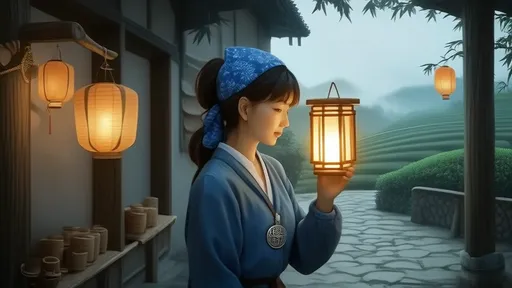
As dusk falls over the village, the paper studios take on a magical quality. Dozens of prototype lamps glow like fireflies, each testing how different weaves, densities, and finishes interact with artificial and candlelight. The artisans speak of rediscovering pride in their craft, not as museum-piece preservation but as living tradition. For designers, the appeal lies in that rare alchemy where material, process, and final application feel intrinsically connected—no surface-level "inspiration," but a deep, respectful collaboration that yields something genuinely new.
This movement raises provocative questions about how we value craftsmanship in the digital age. In a world of algorithm-generated designs and disposable decor, these paper lamps demand slowness—from their meticulous creation to the quality of light they emit. They challenge the notion that innovation must break violently with the past, instead demonstrating how ancient wisdom can illuminate contemporary life, quite literally. The village’s success suggests that the future of design might not lie in chasing the next high-tech material, but in looking more closely at what already exists through fresh eyes.
The story continues to unfold. Recent experiments include embedding the paper with wildflower seeds (so the lamp could be planted after use) and combining it with solar technology for off-grid applications. Meanwhile, the original artisans have begun traveling to design fairs, not as exotic curiosities but as equals in creative partnerships. Their journey from subsistence craft to design-world darling offers a template for other traditional communities—proof that heritage isn’t a constraint but a wellspring of innovation waiting to be tapped.
As one designer remarked while adjusting a prototype in the golden afternoon light, "We aren’t just making lamps. We’re designing how shadows dance." In that poetic observation lies the project’s essence: using light to reveal the hidden beauty in an ancient material, and in doing so, shining new light on the people who’ve kept its traditions alive.