You Won’t Believe What I Found Exploring Gdańsk’s Cityscape
Gdańsk isn’t just another Baltic city—it’s a living canvas of color, history, and unexpected charm. Wandering its cobbled lanes, I was stunned by pastel facades glowing in golden light, medieval spires piercing the skyline, and the vibrant pulse of a port reborn. Every corner tells a story. This is urban exploration at its most poetic—where architecture dances with memory, and discovery feels personal. Let me take you through the cityscape that stole my breath.
First Impressions: Arrival in Gdańsk
As the train slows into Gdańsk Główny, the central station, the city unfolds like a scene from a storybook. Outside the window, red rooftops ripple across the landscape, interwoven with the silhouettes of church towers rising above tree-lined avenues. The Motława River snakes through the city like a silver ribbon, reflecting the morning sky and the gentle curves of historic bridges. There’s a harmony between the modern touches—the sleek trams, the clean station architecture—and the enduring presence of centuries-old structures that have survived wars, rebuilds, and time itself. This balance sets the tone for what’s to come: a city that honors its past without being trapped by it.
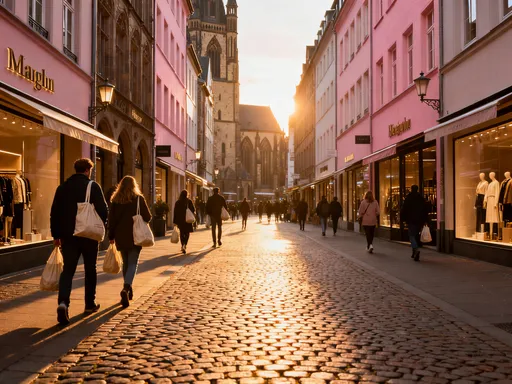
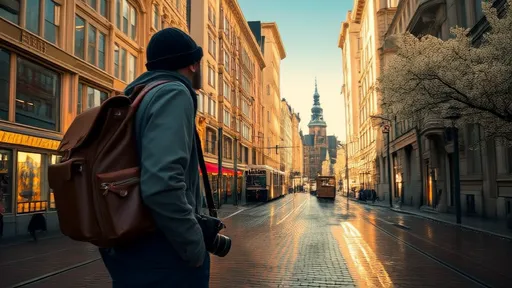
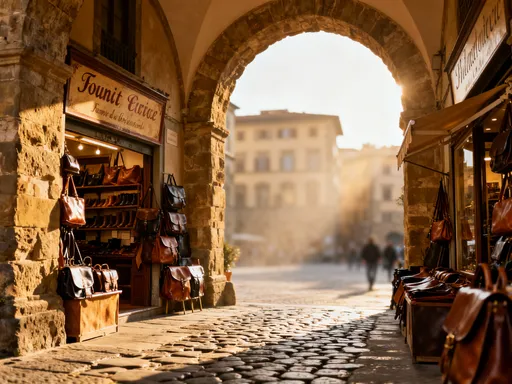
Stepping into the heart of the Old Town, the atmosphere shifts immediately. The hum of traffic fades, replaced by the soft crunch of footsteps on cobbled streets. Wooden signs creak gently in the breeze, bearing the names of old guilds and forgotten trades. The air carries the warm, comforting scent of freshly baked bread from corner bakeries, where locals queue for traditional rye loaves and buttery pastries. It’s in these small sensory details that Gdańsk reveals its soul—not as a museum piece, but as a lived-in, breathing city where history is not displayed behind glass but woven into daily life.
Every building seems to lean slightly, as if whispering secrets to its neighbor. The facades are painted in soft yellows, pinks, and blues—colors that feel both joyful and dignified. These are not arbitrary choices; they echo the city’s Hanseatic heritage, when wealthy merchants competed to build the most ornate homes as symbols of status and taste. Today, those same buildings house cozy cafés, boutique hotels, and artisan shops, proving that beauty and function can coexist. The transition from modern transport hub to historic core is seamless, inviting visitors to leave behind the rush of contemporary life and step into a world where time moves a little slower, and every turn holds a new delight.
The Heartbeat of the City: Long Market & Artus Court
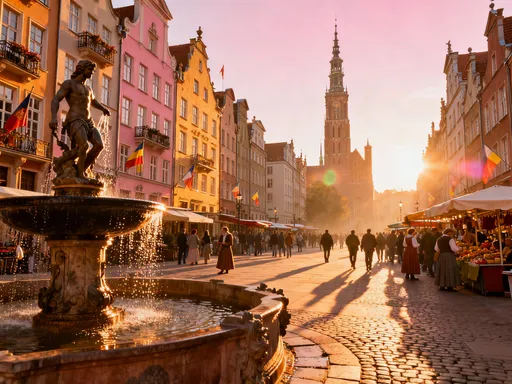
At the center of Gdańsk’s historic pulse lies the Long Market, known locally as Długi Targ. Stretching nearly 200 meters, this grand Renaissance square is one of the most beautifully preserved in Europe. Lined with elaborately decorated tenement houses, each building vies for attention with sculpted gables, ornate doorways, and colorful facades. The symmetry and scale of the square evoke a sense of grandeur, yet it remains intimate—a place where people gather, stroll, and pause for coffee at sidewalk tables beneath striped awnings.
Among the most iconic structures is the Green Gate, a 16th-century ceremonial entrance to the city that once welcomed Polish royalty. Built in the Dutch Mannerist style, its green-tiled roof and arched passageway make it a standout landmark. Just beyond it stands the Neptune Fountain, a baroque masterpiece erected in the early 17th century. The figure of Neptune, god of the sea, raises his trident proudly, a fitting symbol for a city whose identity has always been tied to maritime trade. On warm afternoons, children splash in the shallow basin, and couples lean close for photos, making the fountain not just a monument, but a living part of the city’s rhythm.
Rising at the northern end of the square is the Artus Court, a magnificent building that once served as the social and commercial heart of Gdańsk. Named after King Arthur, it was a meeting place for merchants, diplomats, and visiting dignitaries during the city’s golden age in the 16th and 17th centuries. Inside, the Great Hall is a marvel of Renaissance craftsmanship, with a vaulted ceiling, intricate woodwork, and tapestries depicting mythological scenes. It was here that trade agreements were negotiated, banquets were held, and the city’s wealth and influence were on full display. Today, the Artus Court functions as a museum, offering visitors a glimpse into the opulence and ambition that once defined this Baltic powerhouse.
The Long Market is more than a tourist destination—it is a testament to resilience. Though much of the city was destroyed during World War II, the square was meticulously reconstructed using original plans and historical records. Every stone, every carved detail, was placed with care, not to create a replica, but to restore a legacy. Walking through it now, one feels not only the beauty of the architecture but the determination of a people who refused to let history be erased. This blend of aesthetic grandeur and emotional depth is what makes the Long Market not just a sight to see, but a story to feel.
Elevated Perspectives: Climbing St. Mary’s Church
To truly understand Gdańsk’s scale and spirit, one must ascend St. Mary’s Church, a towering Gothic masterpiece that dominates the city skyline. With over 400 steps leading to its observation platform, the climb is not for the faint of heart—but the reward is unmatched. The staircase is narrow, spiraling tightly within the thick stone walls, each turn revealing small windows that offer fleeting glimpses of rooftops below. The air grows cooler with each flight, and the distant echo of voices fades into silence, broken only by the occasional chime from the church’s massive bells.
Reaching the top, the panorama unfolds in every direction. Thousands of red-tiled roofs stretch like a textured carpet toward the horizon, interrupted only by the spires of other churches and the occasional modern building. To the north, the Vistula Delta spreads out in a patchwork of waterways and green fields, a reminder of the vast inland network that once connected Gdańsk to the heart of Europe. On clear days, a glint of the Baltic Sea can be seen in the distance, a shimmering line where land meets water. The Motława River winds through the city like a silver thread, its path marked by wooden bridges and moored boats.
From this vantage point, the city’s layout becomes clear—a careful balance of order and organic growth. The Old Town forms a compact, almost perfect rectangle, surrounded by green belts and modern neighborhoods that radiate outward. The shipyards, once the heart of industrial Gdańsk, lie to the west, their cranes still standing as silent sentinels of a different era. Seeing the city from above transforms it from a collection of streets and buildings into a living organism, each part connected, each era layered upon the last.
St. Mary’s Church itself is a marvel of medieval engineering. Capable of holding up to 25,000 worshippers in the 15th century, it was one of the largest churches in the world at the time. Though the interior is more restrained than the ornate chapels of Western Europe, its sheer size and simplicity inspire awe. The wooden ceiling, the massive pillars, and the quiet light filtering through stained glass all contribute to a sense of solemn beauty. Standing at the top, one feels both small and connected—small in the face of history and architecture, yet deeply linked to the story of a city that has endured, rebuilt, and flourished.
Along the Waterfront: Crane Street & the Motława River
No exploration of Gdańsk is complete without a walk along the Motława River, where the city’s maritime soul beats strongest. Żuraw Street, named after the medieval crane that once stood guard here, is one of the most picturesque lanes in Europe. Lined with colorful, half-timbered houses leaning slightly over the water, the street feels like a scene from a fairy tale. The old crane—now a museum—was once a crucial piece of port infrastructure, lifting goods from ships and securing Gdańsk’s role as a major trading hub. Today, it stands as a symbol of the city’s ingenuity and industrious past.
Boat tours depart regularly from the quay, offering a unique perspective of the city from the water. As the vessel glides forward, the reflections of palaces and churches ripple on the surface, doubling the beauty of the architecture. Hidden courtyards, invisible from the streets, open up to the river, revealing quiet gardens and arched doorways. The scent of salt and damp wood lingers in the air, mingling with the laughter of passengers and the gentle lap of waves against the hull. These tours are not just scenic—they are narrative, with guides sharing stories of shipbuilders, smugglers, and the golden age of Baltic trade.
The waterfront today serves multiple roles: a historical corridor, a cultural promenade, and a place of leisure. In the evenings, locals gather on benches with ice cream or wine, watching the light change over the water. Artists set up easels to capture the play of color on the buildings, while couples stroll hand in hand beneath the glow of lanterns. Restaurants with outdoor terraces serve fresh fish, pierogi, and amber-colored beer, their menus a tribute to both tradition and innovation. The river, once a highway of commerce, has become a ribbon of connection—between past and present, between people and place.
Along the banks, modern installations blend with historic structures. Sculptures honor maritime legends, and information panels tell the story of the shipyards that shaped Poland’s modern history. Yet there is no sense of heaviness—Gdańsk does not dwell in sorrow, but celebrates survival. The water reflects not just buildings, but a spirit of renewal. Whether seen from a boat, a bridge, or the shore, the Motława River remains the city’s liquid spine, carrying memory and movement in equal measure.
Beyond the Postcard: Hidden Courtyards & Offbeat Alleys
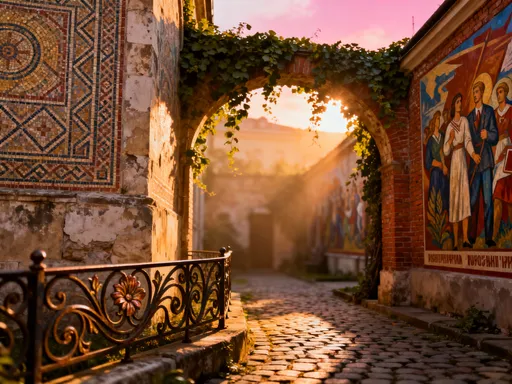
While the main squares and riverside paths draw the crowds, some of Gdańsk’s most enchanting moments are found off the beaten track. Behind unassuming doors and narrow archways lie hidden courtyards—quiet oases of cobblestones, ivy-covered walls, and the soft murmur of fountains. One such gem is the courtyard at Długi Targ 39, accessible through a low stone passage. Stepping inside feels like entering a secret world, where time slows and the noise of tourists fades. Flower boxes overflow with geraniums, and wooden shutters stand slightly ajar, hinting at lives unfolding behind them.
Another quiet retreat is the area around Świętogalarska Gate, where medieval fortifications once stood. Today, the space is a blend of old and new—ancient stone walls frame modern art installations, and a small café nestles in a restored guardhouse. These spaces invite contemplation, offering a different rhythm from the bustling market square. They remind visitors that cities are not just monuments, but collections of intimate moments and private histories.
Wandering through alleys like Szeroka Street, one discovers a more textured version of Gdańsk. Here, graffiti artists have transformed blank walls into vibrant murals, their colors contrasting with the ancient stone. These artworks are not vandalism, but dialogue—between youth and history, between rebellion and tradition. A portrait of a 19th-century sailor might gaze over a spray-painted dove, or a geometric pattern might frame a centuries-old coat of arms. It’s a dynamic conversation, one that keeps the city alive and evolving.
These hidden corners reveal the authentic, less-polished soul of Gdańsk. They are not designed for postcards, but for living. A laundry line strung between buildings, a cat napping in a sunlit doorway, the sound of piano music drifting from an open window—these are the details that make a city feel real. For the thoughtful traveler, these moments are as valuable as any landmark. They offer a sense of discovery, the quiet joy of finding something no guidebook promised. In these alleys and courtyards, Gdańsk whispers its truest stories—not in grand declarations, but in subtle glances and soft footsteps.
Modern Layers: Gdańsk’s Contemporary Architecture
Gdańsk’s story is not frozen in the past. Alongside its historic treasures, the city has embraced contemporary architecture with thoughtfulness and vision. One of the most striking examples is the Museum of the Second World War, a bold, angular structure that rises from a former railway yard. Its design—long, sloping corridors and dramatic concrete forms—evokes movement and memory. Inside, the exhibits are immersive and deeply human, focusing not just on battles and dates, but on personal stories from across Europe. The building itself becomes part of the narrative, a modern vessel for a complex past.
Another transformation can be seen on Wyspa Spichrzów, or Granary Island, once a cluster of 19th-century grain storage buildings. Now revitalized, the island hosts art galleries, design studios, and cultural events. The old brick silos have been preserved, their industrial character respected, while modern glass extensions add light and openness. During summer festivals, the island buzzes with music and creativity, a testament to how heritage and innovation can coexist. It’s a model of urban renewal that honors the past without imitating it.
Throughout the city, new developments are carefully integrated into the historic fabric. Modern apartment buildings use materials and colors that complement, rather than clash with, their surroundings. Public spaces are designed for people—wide sidewalks, green plazas, bike lanes—reflecting a commitment to livability. Even the tram system, updated with low-floor vehicles and real-time information, shows how infrastructure can serve both efficiency and elegance.
This dialogue between old and new is not always perfect, but it is intentional. Gdańsk does not treat modernity as a replacement for history, but as a continuation of it. Each new building, each restored warehouse, adds a chapter to the city’s ongoing story. In doing so, Gdańsk proves that preservation is not about freezing time, but about allowing it to flow—carrying forward what matters, and building upon it with care and courage.
Sunset to Night: The Cityscape After Dark
As the sun begins to dip below the rooftops, Gdańsk undergoes a quiet transformation. The golden light that bathed the pastel facades all day deepens into a warm, honeyed glow, then shifts to rich oranges and soft purples. Shadows lengthen across the cobbles, and the air cools, carrying the scent of blooming jasmine from hidden gardens. This is a magical hour—the moment when the city seems to exhale, settling into a more intimate, reflective mood.
As darkness falls, the landmarks come alive in a new way. The Neptune Fountain sparkles under carefully placed lights, its water catching the glow like liquid silver. Church spires are outlined in delicate illumination, standing like sentinels against the night sky. The Green Gate, bathed in soft amber, appears almost ethereal, as if floating between centuries. Streetlamps cast warm pools of light on the pavement, guiding strollers through quiet squares where the only sounds are footsteps and distant laughter.
The energy shifts from daytime bustle to evening calm. Cafés with outdoor seating fill with locals enjoying a glass of wine or a slice of apple pie. The aroma of coffee and cinnamon drifts through the air. Musicians play softly in corners—sometimes a violin, sometimes an acoustic guitar—adding a gentle soundtrack to the night. There’s a romantic, peaceful quality to Gdańsk after dark, one that invites slow walks and quiet conversation.
For those who stay out late, the city offers a different kind of beauty. The reflections on the Motława River multiply the lights, turning the water into a shimmering canvas. Bridges become arches of gold, and the silhouettes of boats rock gently at anchor. It’s a time for connection—for couples, for friends, for solitary wanderers who find solace in the quiet grandeur of a city that has seen so much, yet remains so welcoming. In these hours, Gdańsk reveals not just its beauty, but its heart.
Conclusion
Gdańsk’s cityscape is more than beauty—it’s resilience, memory, and reinvention woven into brick and water. Exploring it feels like reading a novel where every chapter reveals deeper layers. Whether you're drawn to history, architecture, or simply the joy of wandering, this city offers a journey that lingers long after you leave. Go, walk slowly, and let Gdańsk surprise you.