Baffin Island Inuit
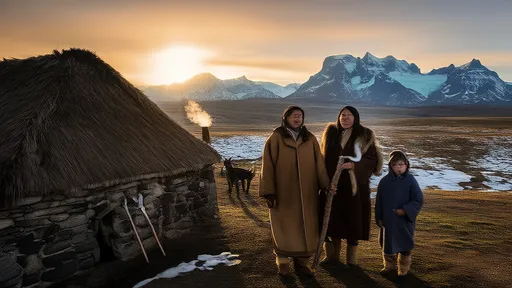
Baffin Island stands as a silent giant in the Canadian Arctic, a landscape of breathtaking scale where glaciers carve through mountains and the midnight sun casts long shadows across the tundra. For thousands of years, this formidable environment has not just been a backdrop but a home, a provider, and a spiritual anchor for the Inuit people. Their story is not one of conquest over nature, but of a profound and intricate symbiosis with it. The relationship between the Inuit and Baffin Island is a testament to human resilience and cultural richness, forged in one of the planet's most challenging climates.
The history of the Inuit on Baffin Island is a deep and layered narrative, stretching back over four millennia. They are not newcomers to the Arctic; they are the descendants of the Thule people, a sophisticated culture of whale hunters who migrated eastward from Alaska around 1000 AD. These ancestors possessed a remarkable technological prowess, crafting the sleek umiak boats for hunting large marine mammals and developing the swift, silent kayak for navigating the icy waters. They built semi-subterranean winter houses from stone, turf, and whalebone, creating warm havens against the brutal cold. Their arrival and establishment across Baffin Island represented the culmination of Arctic adaptation. Life was dictated by the seasons and the migratory patterns of animals. Winters were spent in communal camps, where the shared harvest of a single whale could sustain a group for months. Summers offered mobility, as families traveled to inland hunting grounds, following the caribou herds. This was not a mere struggle for survival; it was a way of life built on profound ecological knowledge and social cooperation, a legacy that continues to inform Inuit identity today.
The cultural and spiritual world of the Baffin Island Inuit is as vast and complex as the landscape itself. At its core is a worldview that sees no separation between the human, animal, and spiritual realms. This belief system is governed by the concept of Sila, often translated as the weather, the air, or the consciousness of the world. Sila is the life force that connects all things, a power that must be respected and maintained through balance. Central to maintaining this balance is the observance of Maligait, the traditional laws. These are not written statutes but oral commandments passed down through generations, governing everything from hunting practices to social conduct. They dictate how to treat animals with respect, ensuring that their souls would return to be hunted again. For instance, a successful hunter would offer a drink of fresh water to a slain seal, honoring its spirit.
The arrival of European whalers and explorers in the 16th and 17th centuries marked the beginning of a profound and often painful transformation. Initial contact was often centered on trade, with the Inuit exchanging furs and walrus ivory for metal tools, wood, and other manufactured goods. While these new materials were advantageous, they began to alter traditional technologies and economies. The more disruptive forces, however, came later with the establishment of permanent trading posts and, most significantly, the influence of Christian missionaries and the Canadian government. The traditional Inuit spiritual beliefs were systematically challenged and suppressed. The government's policies, particularly from the 1950s onwards, led to the forced settlement of nomadic families into centralized communities like Iqaluit, Pangnirtung, and Pond Inlet. This sudden shift from a life on the land to one in fixed settlements had devastating social consequences, disrupting kinship structures, eroding traditional knowledge, and creating dependencies on a wage economy. The legacy of this colonial period is a complex tapestry of resilience and loss that modern Inuit communities continue to navigate.
In the face of these historical challenges, the Inuit of Baffin Island have demonstrated remarkable agency and resilience. The late 20th century saw a powerful political and cultural reawakening. The land claims movement culminated in 1999 with the creation of Nunavut, Canada's newest territory, whose government is predominantly Inuit-led. This was a monumental achievement, granting the people of Baffin Island a significant degree of self-determination over their lands, resources, and future. Alongside political empowerment, there has been a vibrant cultural renaissance. The ancient art of storytelling is now channeled into filmmaking and literature. The distinctive print-making and textile arts from studios in Pangnirtung and Cape Dorset are celebrated worldwide for their beauty and power, depicting scenes of camp life, animal spirits, and the Arctic landscape. Inuktitut, the Inuit language, is an official language of Nunavut, and efforts to revitalize it among the youth are central to preserving cultural identity. This is not a culture frozen in time; it is dynamic, actively reclaiming its past to shape its future.
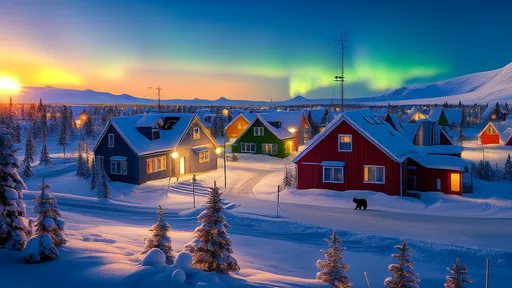
Today, life on Baffin Island is a unique blend of the traditional and the contemporary. Snowmobiles have largely replaced dog teams for transportation, and modern homes stand where sod houses once did. Yet, the rhythm of life is still deeply connected to the land and sea. Inuit Qaujimajatuqangit, meaning Inuit traditional knowledge, remains a vital source of wisdom. Hunters still venture out onto the sea ice, reading its cracks and textures with an expertise that no satellite can match, to harvest seals, walrus, and narwhal. This country food is not just a dietary staple; it is a cultural touchstone, shared in community feasts and reinforcing social bonds. The challenges, however, are immense. The high cost of living, food insecurity, and a housing crisis place severe strains on communities. Furthermore, the specter of climate change looms larger here than almost anywhere else on Earth. The warming climate is causing the sea ice to form later and break up earlier, threatening the safety of hunters and the stability of the entire marine ecosystem upon which Inuit life and culture depend.
Looking forward, the future of the Baffin Island Inuit is intrinsically tied to their ability to steer a course through the dual challenges of modernization and climate change. Their greatest strength lies in their enduring connection to their homeland and the robust cultural identity that has weathered centuries of change. The path involves integrating the best of modern science and technology with the unparalleled depth of Inuit Qaujimajatuqangit. Inuit hunters are now working alongside climatologists, their observations providing crucial ground-level data on the changing environment. There is a growing movement towards sustainable economic development that is rooted in Inuit values, such as culturally-aware tourism and the support of local arts and crafts. The story of the Baffin Island Inuit is far from over. It is a continuing narrative of adaptation, a demonstration that even in the face of global forces, a culture grounded in deep knowledge of place and a resilient spirit can not only endure but also chart its own destiny. Their journey offers a powerful lesson to the world about the true meaning of sustainability and the unbreakable bond between a people and their land.