Packing Essentials I'm Crazy About – Borrow My Favorites! 🧳
You know that feeling when you're staring at an empty suitcase, and a low-grade panic starts to set in? You're not sure if you're packing too much, too little, or just the wrong things entirely. I've been there more times than I can count, but after years of trial and error—from weekend jaunts to month-long international trips—I've finally cracked the code. My packing strategy has evolved from a chaotic free-for-all to a streamlined, almost therapeutic ritual. And the best part? It saves me from checked baggage fees, lost luggage anxiety, and the sheer agony of lugging a heavy bag through a train station.
By the time you finish reading this, you'll have a complete blueprint for packing like a pro. We're going to start with the absolute non-negotiables that form the foundation of any trip, then move into the clever organizers that make everything accessible, and finally, we'll dive into those unique items that transform a good trip into a great one. Forget generic lists; this is about building a personalized, versatile capsule that works for you.
The Unshakeable Foundation: Core Items You Can't Travel Without
Let's talk about the bedrock of any well-packed bag. These aren't the exciting items, but they are the ones that will save you from disaster. First and foremost, a universal power adapter with multiple USB ports. I learned this the hard way after arriving in London with a dead phone and an adapter that only worked in one specific outlet. Now, my go-to is a slim, global adapter that can handle the US, UK, EU, and Australia. It's a no-brainer that keeps all my devices alive. Next, a portable power bank. Whether you're relying on Google Maps for navigation or capturing endless photos, your phone's battery will drain faster than you think. A compact, high-capacity power bank is a literal lifeline.
Then there's the medicine and first-aid kit. I'm not talking about a bulky field hospital kit. I mean a small, zippered pouch with the essentials: pain relievers, anti-diarrheal medication, bandaids, and a few doses of your regular prescriptions. I was once hit with a migraine in a small Italian village on a Sunday when all the pharmacies were closed. That small pouch of ibuprofen was worth its weight in gold. The common mistake is thinking "I can buy it there." But "there" might be a remote location, or it might be 2 AM when you need it most. Being self-sufficient is a core part of smart packing.
The Organization Game-Changers: How to Pack, Not Just Stuff
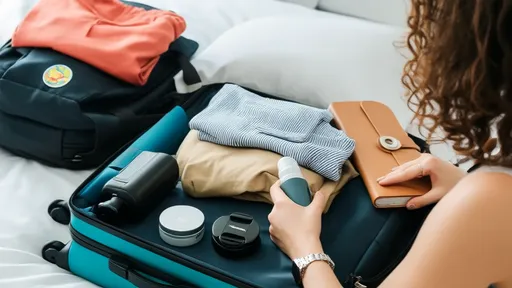
This is where the magic happens. Moving from just throwing things in a suitcase to organizing them with intention is a total game-changer. My number one hack? Packing cubes. I know, everyone talks about them, but are you using them correctly? I use a color-coded system: one cube for tops, one for bottoms, and a smaller one for underwear and socks. It compresses your clothes, keeps them neat, and means you never have to unpack your entire bag at a hotel. You just pull out the cubes and place them in a drawer. It’s not just about space; it's about sanity.
Another item I'm obsessed with is a hanging toiletry bag. Mine has clear compartments and hooks directly onto the back of a bathroom door. No more placing my toiletries on a questionable countertop or trying to balance everything on a tiny shelf. It keeps all my liquids contained and visible, so I never forget a product. For my makeup, I use a separate, hard-shell case with movable dividers to prevent my favorite palette from shattering. The mistake people make is using one giant, unstructured bag for everything. When you arrive, it becomes a tangled mess of cords, toothpaste, and shampoo. A little separation creates a lot of peace.
The Versatile Heroes: Clothing That Works Overtime
Packing light is all about choosing pieces that multitask. The goal is to create a small, cohesive capsule wardrobe where everything mixes and matches. My absolute hero item is a classic, high-quality black blazer. It can dress up a simple t-shirt and jeans for a nice dinner, provide an extra layer on a chilly flight, and even work as a light jacket for a breezy evening. Another fave? A large, lightweight scarf or pashmina. It's a blanket on the plane, a cover-up for visiting religious sites, a picnic blanket in the park, and, of course, a stylish accessory.
For footwear, I stick to a strict three-pair maximum: a comfortable walking shoe (like a stylish sneaker), a versatile flat or loafer, and one pair of dressier shoes that are still comfortable. I once packed four pairs of heels for a five-day trip and wore one pair for two hours. It was a brutal lesson in practicality. The key is to choose neutral colors that complement all your outfits. Roll your jeans and knits to save space and minimize wrinkles, and use your shoes' dead space—stuff socks and rolled belts inside them.
The Little Luxuries and Life-Savers
Beyond the basics, there are a few items that aren't strictly necessary but dramatically improve the travel experience. A reusable water bottle with a filter is one of them. It saves you money, reduces plastic waste, and means you can fill up from any tap without worry. Another game-changer is a small, packable duffel bag. I keep one folded up in the outer pocket of my suitcase. It's perfect for dirty laundry on the way home, or for an impromptu shopping trip when you've bought more than you planned.
Don't forget a physical notebook and pen. In our digital age, it seems redundant, but it's invaluable for jotting down a restaurant recommendation from a local, sketching a quick map, or just journaling when you want to disconnect. I also never travel without a few Ziploc bags in various sizes. They have a million uses: storing a wet swimsuit, protecting electronics from rain, or keeping snacks fresh. They take up virtually no space and have gotten me out of more jams than I can count.
The Mindset That Makes It All Work
Ultimately, efficient packing is as much about psychology as it is about the physical items. It’s about letting go of the "what if" mentality. What if there's a gala? What if it's unseasonably cold? Chances are, you can buy a specific item if a truly unexpected event arises. The freedom of traveling with a light, organized bag far outweighs the minor inconvenience of potentially having to purchase an umbrella. This mindset shift—from being prepared for every conceivable scenario to being prepared for the most likely ones—is the final, crucial piece of the puzzle. It transforms packing from a stressful chore into an empowering first step of your adventure.
Packing smart isn't about deprivation; it's about curation. It’s choosing the items that serve multiple purposes, bring you comfort, and ultimately, get out of the way so you can focus on the experiences that matter. Start with one of these tips on your next trip—maybe try the packing cubes or finally invest in that global adapter. You'll be amazed at how much lighter you feel, both in your bag and in your spirit. Happy travels!